
 Key eligibility criteria1
Inclusion criteria
- Patients had confirmed RRMM
-
Patients had received 1-3 prior lines of therapy including a proteasome inhibitor
and lenalidomide
- Patients who had received only one prior line of therapy must have been refractory to lenalidomide
Exclusion criteria
- Refractoriness to anti-CD38 mAbs
- Prior BCMA-directed therapy
Patients received TECVAYLI® in combination with daratumumab and hyaluronidase-fihj as follows1:
- Subcutaneous TECVAYLI® step-up doses of 0.06 mg/kg and 0.3 mg/kg,
followed by
TECVAYLI® 1.5 mg/kg once weekly from Weeks 2 to 8, then 3 mg/kg every two weeks from
Weeks 9 to 24, then 3 mg/kg every four weeks starting on Week 25 until disease
progression or unacceptable toxicity,
AND - Subcutaneous daratumumab and hyaluronidase-fihj 1,800 mg/30,000 units (1,800 mg of daratumumab and 30,000 units of hyaluronidase) starting one day prior to TECVAYLI® and continuing once weekly from Weeks 1 to 8, then every two weeks from Weeks 9 to 24, then every four weeks starting on Week 25 until disease progression or unacceptable toxicity.
Due to the risk of CRS and neurologic toxicity, including ICANS, patients should be hospitalized for 48 hours after administration of both step-up dose 1 and step-up dose 2. Instruct patients to remain within proximity of a healthcare facility and monitor them daily for 48 hours after the first treatment dose within the TECVAYLI® step-up dosing schedule1


aThe step-up dosing schedule is a component of the recommended TECVAYLI
dosage but is not applicable for the daratumumab and hyaluronidase-fihj dosing.
bSee Prescribing Information for recommendations on restarting Tec after dose
delays.
cStep-up dose 1 must be administered 20 hours or more after the daratumumab
and hyaluronidase-fihj dose.
dStep-up dose 2 may be given between 2 to 4 days after step-up dose 1 and if
adverse reactions occur, step-up dose 2 may be given up to 7 days after step-up dose 1
to allow for resolution of adverse reactions.
eFirst treatment dose (1.5 mg/kg) may be given between 2 to 4 days after
step-up dose 2 and if adverse reactions occur, first full treatment dose may be given up
to 7 days after step-up dose 2 to allow for resolution of adverse reactions.
fAdminister TECVAYLI® at least 3 hours after the daratumumab and
hyaluronidase-fihj dose for the first treatment dose. For subsequent doses, administer
TECVAYLI® at least 15 minutes after the daratumumab and hyaluronidase-fihj dose.
gMaintain a minimum of 5 days between 1.5 mg/kg once weekly doses.
hMaintain a minimum of 12 days between 3 mg/kg every two weeks doses.
iMaintain a minimum of 25 days between 3 mg/kg every four weeks doses.
jFor dosage and administration instruction for daratumumab and
hyaluronidase-fihj, refer to daratumumab and hyaluronidase-fihj Prescribing
Information.
kAdminister pretreatment medications 1 to 3 h before each dose of the Tec
step-up dosing schedule to reduce risk of CRS. Administration of pretreatment
medications may be required prior to administration of subsequent doses of Tec in
patients who repeat doses within the Tec step-up dosing schedule following a dose delay
or experienced CRS following the prior dose of Tec.
 Primary endpoint1
- PFS as assessed by IRC assessment based on IMWG 2016 criteria
 Other endpoints1,3
- ≥CR, IRC assessment based on IMWG 2016 criteria
- ORR, IRC assessment based on IMWG 2016 criteria
- MRD negativity (10-5)
- OS
- Safety
| Baseline demographic and disease characteristics1 | N=587 |
|---|---|
| Median age, years (range) | 64 (25-88) |
| 65-74 years of age, % | 38 |
| ≥75 years of age, % | 10 |
| Male, % | 55 |
| Race, % | |
| White | 65 |
| Black or African American | 6 |
| Asian | 22 |
| International Staging System stage, % | |
| Stage I | 63 |
| Stage II | 29 |
| Stage III | 8 |
| High-risk cytogeneticsa, % | 35 |
| Extramedullary disease, % | 5 |
| Median prior lines of therapy (range) | 2 (1-3) |
| 1 prior line of therapy, % | 38 |
| Prior exposure to lenalidomide, % | 100 |
| Prior exposure to a proteasome inhibitor, % | 99.8 |
| Refractory to lenalidomide, % | 84 |
| Prior autologous stem cell transplantation, % | 74 |
| Prior anti-CD38 monoclonal antibody therapyb, % | 5 |
|
aPresence of del(17p), t(4;14) or
t(14;16). |
|
|
TECVAYLI® with daratumumab hyaluronidase-fihj (N=291) |
DPd or DVd (N=296) |
|
|---|---|---|
| Progression-free survival (PFS)a | ||
| Number of events, n (%) | 44 (15) | 187 (63) |
| Median, months (95% CI) | NR (NE, NE) | 18.1 (14.6, 22.8) |
| Hazard ratio (95% CI)b; p-valuec | 0.17 (0.12, 0.23); <0.0001 | |
| Overall survival (OS)a | ||
| Number of events, n (%) | 46 (16) | 98 (33) |
| Median, months (95% CI) | NR (NE, NE) | NR (41.4, NE) |
| Hazard ratio (95% CI)b; p-valuec | 0.46 (0.32, 0.65); <0.0001 | |
| Overall response (sCR+CR+VGPR+PR)a, n (%) | 259 (89.0) | 223 (75.3) |
| 95% CI (%) | (84.8, 92.4) | (70.0, 80.1) |
| p-valued | <0.0001 | |
| Stringent complete response (sCR), n (%) | 225 (77.3) | 69 (23.3) |
| Complete response (CR), n (%) | 13 (4.5) | 26 (8.8) |
| Very good partial response (VGPR), n (%) | 14 (4.8) | 74 (25.0) |
| Partial response (PR), n (%) | 7 (2.4) | 54 (18.2) |
| Complete response or better (sCR+CR)a, n (%) | 238 (81.8) | 95 (32.1) |
| 95% CI (%) | (76.9, 86.0) | (26.8, 37.7) |
| p-valued | <0.0001 | |
| MRD negativitye,f, N | 262 | 269 |
| n (%) | 153 (58.4) | 46 (17.1) |
| 95% CI (%) | (52.2, 64.4) | (12.8, 22.1) |
| p-valueg | <0.0001 | |
| MRD negativity rate in patients with CR or betterf | ||
| Number of patients with CR or better, n | 216 | 86 |
| MRD negativity rate n (%) | 153 (70.8) | 46 (53.5) |
| 95% CI (%) | (64.3, 76.8) | (42.4, 64.3) |
|
aBased on intent-to-treat analysis set. |
||


- At a median follow-up of 34.5 months, TECVAYLI® and DARZALEX FASPRO® demonstrated a statistically significant improvement in PFS vs DPd/DVd (HRa: 0.17; 95% CI: 0.12, 0.23; p-valueb<0.0001)1
- Median PFS was not reached in the TECVAYLI® and DARZALEX FASPRO® arm (95% CI: NE-NE) vs 18.1 months (95% CI: 14.6-22.8) in the DPd/DVd arm1
- At 36 months, the estimated PFS rate was 83.4% (95% CI: 78.2%, 87.4%) in patients receiving TECVAYLI® in combination with DARZALEX FASPRO® vs 29.7% (95% CI: 23.6%, 36.0%) in patients receiving DPd/DVd3
aStratified Cox proportional hazard model. For all stratified analyses,
stratification was based on ISS staging (I vs. II or III) and number of prior lines
of therapy (1 vs. 2 or 3), as randomized.
bStratified log-rank test.

- At a median follow-up of 34.5 months, TECVAYLI® in combination with DARZALEX FASPRO® significantly improved OS (HRa: 0.46; 95% CI: 0.32, 0.65; p-valueb<0.0001)1
- TECVAYLI® in combination with DARZALEX FASPRO® provided an estimated 36-month OS of 83.3% (95% CI: 78.3%, 87.2%) compared with 65.0% with DPd/DVd (95% CI: 58.8%, 70.5%)3
aStratified Cox proportional hazard model. For all stratified analyses,
stratification was based on ISS staging (I vs. II or III) and number of prior lines
of therapy (1 vs. 2 or 3), as randomized.
bStratified log-rank test.

- In the 15 patients in MajesTEC-3 who had received a prior anti-CD38 monoclonal antibody, the ORR was 93.3% (95% CI: 68.1, 99.8)1,c
aORR: sCR+CR+VGPR+PR and ≥CR: sCR+CR.
bStratified Cochran Mantel-Haenszel chi-squared test.
cThere is limited data with TECVAYLI® in combination with daratumumab and
hyaluronidase-fihj in patients who have received or are refractory to prior
anti-CD38 monoclonal antibody therapy.
This information is not included in the current full TECVAYLI® Prescribing Information.
The widths of the confidence intervals have not been adjusted for multiplicity and may not be used in place of hypothesis testing.
Post hoc analyses results should be interpreted with caution since findings are not prespecified.
Subgroup analyses were exploratory and limited by small sample sizes; results should be interpreted with caution and no definitive conclusions should be drawn.

From The New England Journal of Medicine. Luciano J. Costa, Nizar J. Bahls, Aurore Perrot, et al. Teclistamab plus Daratumumab in Relapsed or Refractory Multiple Myeloma, 394. Copyright © (2026) Massachusetts Medical Society. Reprinted with permission from Massachusetts Medical Society
WARNING: CYTOKINE RELEASE SYNDROME and NEUROLOGIC TOXICITY including IMMUNE EFFECTOR CELL-ASSOCIATED NEUROTOXICITY SYNDROME
See full prescribing information for complete boxed warning
Cytokine release syndrome (CRS), including life-threatening or fatal reactions, can occur in patients receiving TECVAYLI®. Initiate TECVAYLI® treatment with step-up dosing to reduce the risk of CRS. Withhold TECVAYLI® until CRS resolves or permanently discontinue based on severity.
Neurologic toxicity, including Immune Effector Cell-Associated Neurotoxicity Syndrome (ICANS), and serious and life-threatening or fatal reactions, can occur with TECVAYLI®. Monitor patients for signs and symptoms of neurologic toxicity, including ICANS during treatment. Withhold TECVAYLI® until neurologic toxicity resolves or permanently discontinue based on severity.
Because of the risk of CRS and neurologic toxicity, including ICANS, TECVAYLI® is available only through a restricted program under a Risk Evaluation and Mitigation Strategy (REMS) called the TECVAYLI® and TALVEY® REMS.
Contraindications1:
None
Warnings and precautions1:
Please see the full Prescribing Information for more details.
 Cytokine release syndrome
TECVAYLI® can cause cytokine release syndrome (CRS), including life-threatening or fatal reactions.
In the clinical trials (monotherapy and combination therapy; N=448), CRS occurred in 64% of patients who received TECVAYLI at the recommended dosage, with Grade 1 CRS occurring in 46% of patients, Grade 2 in 18%, and Grade 3 in 0.2%. Recurrent CRS occurred in 27% of patients. Most patients experienced CRS during the initial step-up dosing schedule (step-up dose 1 [37%], step-up dose 2 [32%], or the initial treatment dose [20%]). CRS first occurred following subsequent doses of TECVAYLI® in 2.5% of patients. The median time to onset of CRS was 2 (range: 1 to 9) days after the most recent dose and the median duration of CRS was 2 (range: 1 to 22) days.
Clinical signs and symptoms of CRS included, but were not limited to, fever, hypoxia, chills, hypotension, sinus tachycardia, headache, and elevated liver enzymes (aspartate aminotransferase and alanine aminotransferase elevation).
Initiate therapy according to TECVAYLI® step-up dosing schedule to reduce risk of CRS. Administer pretreatment medications to reduce risk of CRS and monitor patients following administration of TECVAYLI® accordingly.
At the first sign of CRS, immediately evaluate the patient for hospitalization. Administer supportive care based on severity and consider further management per current practice guidelines. Withhold until CRS resolves or permanently discontinue TECVAYLI® based on severity.
TECVAYLI® is available only through a restricted program under a REMS.
 Neurologic toxicity including ICANS
TECVAYLI® can cause serious, life-threatening, or fatal neurologic toxicity, including immune effector cell-associated neurotoxicity syndrome (ICANS).
In the clinical trials (monotherapy and combination therapy trials; N=448), neurologic toxicity occurred in 60% of patients who received TECVAYLI® at the recommended dosage, with Grade 3 or 4 neurologic toxicity in 6%. Neurologic toxicities reported in ≥5% of patients included headache (27%), sensory neuropathy (16%), motor dysfunction (15%), insomnia (12%), encephalopathy (11%), and dizziness (8%). Fatal neurologic toxicity occurred in 0.4% of patients, including Guillain-Barré syndrome and status epilepticus (one patient each).
In MajesTEC-1, ICANS was reported in 6% of patients who received TECVAYLI® as monotherapy at the recommended dosage. Recurrent ICANS occurred in 1.8% of patients. Most patients experienced ICANS following step-up dose 1 (1.2%), step-up dose 2 (0.6%), or the initial treatment dose (1.8%). Less than 3% of patients developed first occurrence of ICANS following subsequent TECVAYLI® doses. The median time to onset of ICANS was 4 (range: 2 to 8) days after the most recent dose with a median duration of 3 (range: 1 to 20) days. The most frequent clinical manifestations of ICANS reported were confusional state and dysgraphia.
In MajesTEC-3, ICANS was reported in 1.1% of patients who received the recommended TECVAYLI® dosage in combination with daratumumab and hyaluronidase-fihj, including Grade 4 ICANS in 1 patient. All events of ICANS occurred during the step-up dosing schedule. The median time to onset of ICANS was 2 (range: 1 to 3) days after the most recent dose and the median duration of ICANS was 2 (range: 1 to 2) days. The clinical manifestations of ICANS reported were amnesia, encephalopathy and delirium.
The onset of ICANS can be concurrent with CRS, following resolution of CRS, or in the absence of CRS.
Monitor patients for signs and symptoms of neurologic toxicity, including ICANS during TECVAYLI® treatment. At the first sign of neurologic toxicity, including ICANS, immediately evaluate patient and provide supportive therapy based on severity. Withhold until neurologic toxicity resolves or permanently discontinue TECVAYLI® based on severity per recommendations and consider further management per current practice guidelines.
Due to the potential for neurologic toxicity, patients receiving TECVAYLI® are at risk of depressed level of consciousness. Advise patients to refrain from driving or operating heavy or potentially dangerous machinery during and for 48 hours after completion of TECVAYLI® step-up dosing schedule and in the event of new onset of any neurologic toxicity symptoms until neurologic toxicity resolves.
TECVAYLI® is available only through a restricted program under a REMS.
 TECVAYLI® and TALVEY® REMS
TECVAYLI® is available only through a restricted program under a REMS called the TECVAYLI® and TALVEY REMS because of the risks of CRS and neurologic toxicity, including ICANS.
 Hepatotoxicity
TECVAYLI® can cause hepatotoxicity, including fatalities. There was one fatal case of hepatic failure in MajesTEC-1. In patients who received TECVAYLI® at the recommended dosage in the clinical trials (monotherapy and combination therapy trials; N=448) elevated aspartate aminotransferase (AST) occurred in 47% of patients, with Grade 3 or 4 elevations in 2.9%. Elevated alanine aminotransferase (ALT) occurred in 48% of patients, with Grade 3 or 4 elevations in 3.8%. Elevated total bilirubin occurred in 10% of patients with Grade 3 or 4 elevations in 0.7%. Liver enzyme elevation can occur with or without concurrent CRS.
Monitor liver enzymes and bilirubin at baseline and during treatment as clinically indicated. Withhold TECVAYLI® or consider permanent discontinuation of TECVAYLI® based on severity.
 Infections
TECVAYLI® can cause severe, life-threatening, or fatal infections.
In MajesTEC-1 (N=165), in patients who received the recommended TECVAYLI® dosage, serious infections, including opportunistic infections, occurred in 30% of patients, Grade 3 or 4 infections in 35% of patients, and fatal infections in 4.2% of patients.
In MajesTEC-3 (N=283), in patients who received TECVAYLI in combination with daratumumab and hyaluronidase-fihj at the recommended dosage, serious infections, including opportunistic infections, occurred in 54% of patients, Grade 3 or Grade 4 infections in 54% of patients, and fatal infections in 4.6% of patients.
Monitor patients for signs and symptoms of infection prior to and during treatment with TECVAYLI® and treat appropriately. Administer prophylactic antimicrobials according to current practice guidelines.
Withhold TECVAYLI® or consider permanent discontinuation of TECVAYLI® based on severity.
Monitor immunoglobulin levels prior to and during treatment with TECVAYLI® and administer subcutaneous or intravenous immunoglobulin (IVIG) to maintain the serum levels >400 mg/dL.
 Neutropenia
TECVAYLI® can cause neutropenia and febrile neutropenia. In patients who received TECVAYLI® at the recommended dosage in the clinical trials (monotherapy and combination therapy trials; N=448), decreased neutrophils occurred in 88% of patients, with Grade 3 or 4 decreased neutrophils in 70%. Febrile neutropenia occurred in 6% of patients.
Monitor complete blood cell counts at baseline and periodically during treatment and provide supportive care per local institutional guidelines.
Monitor patients with neutropenia for signs of infection.
Withhold TECVAYLI® based on severity.
 Hypersensitivity and other administration reactions
TECVAYLI® can cause both systemic administration-related and local injection-site reactions.
Systemic reactions - In patients who received the recommended TECVAYLI® dosage in the clinical trials (monotherapy and combination therapy trials; N=448), 2.5% of patients experienced systemic-administration reactions, which included recurrent pyrexia and rash.
Local reactions - In patients who received TECVAYLI® at the recommended dosage in the clinical trials (monotherapy and combination therapy trials; N=448), injection-site reactions occurred in 37% of patients, with Grade 1 injection-site reactions in 29% and Grade 2 in 9%.
Withhold TECVAYLI® or consider permanent discontinuation of TECVAYLI® based on severity.
 Embryo-fetal toxicity
Based on its mechanism of action, TECVAYLI® may cause fetal harm when administered to a pregnant patient. Advise pregnant patients of the potential risk to the fetus. Advise females of reproductive potential to use effective contraception during treatment with TECVAYLI® and for 5 months after the last dose.
 Adverse reactions
The most common adverse reactions (≥20%) in patients who received TECVAYLI® monotherapy were pyrexia, CRS, musculoskeletal pain, injection site reaction, fatigue, upper respiratory tract infection, nausea, headache, pneumonia, and diarrhea. The most common adverse reactions (≥20%) in patients who received TECVAYLI® in combination with daratumumab and hyaluronidase-fihj were hypogammaglobulinemia, upper respiratory tract infection, CRS, cough, diarrhea, musculoskeletal pain, COVID-19, pneumonia, injection site reaction, fatigue, pyrexia, headache, nausea, gastroenteritis, and weight decreased.
The most common Grade 3 to 4 laboratory abnormalities (≥20%) with TECVAYLI® (as monotherapy or in combination with daratumumab and hyaluronidase-fihj) were decreased lymphocytes, decreased neutrophils, decreased white blood cells, decreased hemoglobin, and decreased platelets.
Please read full Prescribing Information, including Boxed WARNING, for
TECVAYLI®.
cp-322928v6
- Median exposure for TECVAYLI® in combination with daratumumab hyaluronidase-fihj was 32 (range: 0.03-43) months and 16 (range: 0.03-45) months for DPd or DVd1.
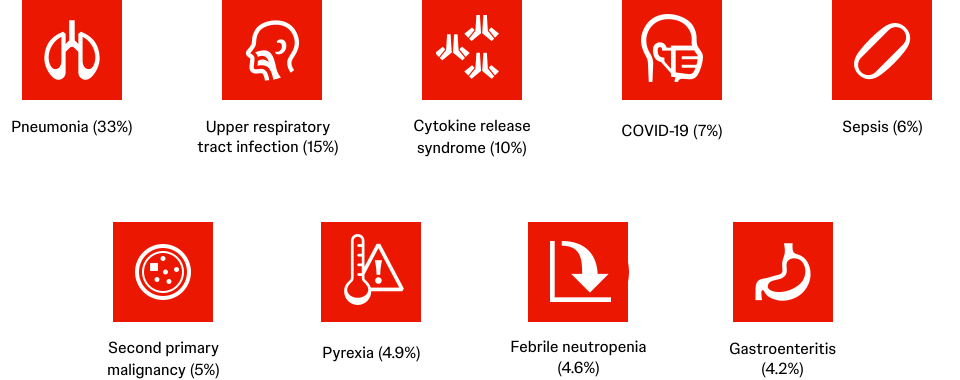
- Serious adverse reactions occurred in 71% of patients who received TECVAYLI® in combination with daratumumab hyaluronidase-fihj and in 62% of patients receiving DPd/DVd1,4. Serious adverse reactions reported in ≥3% of patients included1:







- Fatal adverse reactions occurred in 2.5% of patients who received TECVAYLI® in combination with daratumumab hyaluronidase-fihj, included sepsis (0.7%), pneumonia (0.4%), sudden death (0.4%), myocardial infarction (0.4%), enterovirus myocarditis (0.4%) and hemophagocytic lymphohistiocytosis (0.4%)1.
-
Permanent treatment discontinuation of TECVAYLI® due to an adverse reaction occurred
in 6% of patients1.
- Adverse reactions which resulted in permanent discontinuation of TECVAYLI® in more than one patient were pneumonia (1.1%), diarrhea (0.7%), fatigue (0.7%), second primary malignancy (0.7%), upper respiratory tract infection (0.7%) and cough (0.7%)1.
-
Dosage interruptions of TECVAYLI® due to an adverse reaction occurred in 94% of
patients1.
- Adverse reactions which required dosage interruption of TECVAYLI® in ≥5% of patients included neutropenia (53%), upper respiratory tract infection (48%), COVID-19 (34%), pneumonia (34%), thrombocytopenia (14%), cytokine release syndrome (13%), gastroenteritis (10%), cough (10%), pyrexia (8%), diarrhea (7%), sepsis (6%) and fatigue (5%)1.
- Clinically relevant adverse reactions in <10% of patients who received TECVAYLI® in combination with daratumumab hyaluronidase-fihj included sepsis, encephalopathy, CMV infection, febrile neutropenia and ICANS1.
-
The most common adverse reactions (≥20%) included1:
- Hypogammaglobulinemia
- Upper respiratory tract infection
- Cytokine release syndrome
- Cough
- Diarrhea
- Musculoskeletal pain
- COVID-19
- Pneumonia
- Injection site reaction
- Fatigue
- Pyrexia
- Headache
- Nausea
- Gastroenteritis
- Weight decreased
-
The most common Grade 3 or 4 laboratory abnormalities (≥20%) were1:
- Decreased lymphocytes
- Decreased neutrophils
- Decreased white blood cells
- Decreased platelets
| Adverse reaction | TECVAYLI® with daratumumab hyaluronidase-fihj (N=283) |
DPd or DVd (N=290) |
||
|---|---|---|---|---|
|
Any grade (%) |
Grade 3 or 4 (%) |
Any grade (%) |
Grade 3 or 4 (%) |
|
| Immune system disorders | ||||
| Hypogammaglobulinemiaa | 84 | 6 | 60 | 1.4 |
| Cytokine release syndrome | 60 | 0 | 0 | 0 |
| Infections | ||||
| Upper respiratory tract infectionb | 79 | 17 | 62 | 13 |
| COVID-19* | 45 | 6 | 33 | 2.1 |
| Pneumoniac,† | 42 | 33 | 35 | 28 |
| Gastroenteritis* | 20 | 4.9 | 8 | 0.7 |
| Urinary tract infection* | 17 | 2.8 | 13 | 1 |
| Herpes virus infection* | 11 | 2.1 | 6 | 0.3 |
| Respiratory, thoracic and mediastinal disorders | ||||
| Cough* | 53 | 0.7 | 24 | 0 |
| Dyspnea* | 13 | 1.8 | 20 | 2.1 |
| Gastrointestinal disorders | ||||
| Diarrhea* | 52 | 3.9 | 31 | 2.4 |
| Nausea | 23 | 0 | 12 | 0.3 |
| Vomiting* | 17 | 0 | 7 | 0 |
| Abdominal pain* | 16 | 0.7 | 13 | 0 |
| Constipation | 14 | 0 | 20 | 0.3 |
| Musculoskeletal and connective tissue disorders | ||||
| Musculoskeletal pain* | 50 | 1.4 | 47 | 4.5 |
| General disorders and administration site conditions | ||||
| Injection site reaction*# | 41 | 0 | 4.5 | 0 |
| Fatigue* | 39 | 3.9 | 40 | 4.1 |
| Pyrexia | 37 | 1.4 | 19 | 0.3 |
| Edema* | 13 | 0.4 | 22 | 0.3 |
| Nervous system disorders | ||||
| Headache* | 26 | 1.4 | 12 | 0.3 |
| Sensory neuropathyd | 17 | 0.7 | 25 | 0.3 |
| Motor dysfunctione | 14 | 0 | 30 | 1 |
| Investigations | ||||
| Weight decreased | 20 | 2.8 | 7 | 1.4 |
| Metabolism and nutrition disorders | ||||
| Decreased appetite | 19 | 1.1 | 7 | 0 |
| Cardiac disorders | ||||
| Cardiac arrhythmia* | 11 | 1.1 | 8 | 2.1 |
| Neoplasms | ||||
| Second primary malignancy* | 11 | 4.6 | 9 | 4.8 |
| Vascular disorders | ||||
| Hypertension* | 11 | 4.6 | 6 | 2.4 |
|
Adverse reactions were graded based on CTCAE version 5.0, with the
exception of ICANS and CRS, which were graded per ASTCT 2019
consensus grading system; adverse reactions that were considered
symptoms of CRS or ICANS were not included. |
||||
| Laboratory abnormality | TECVAYLI® with daratumumab hyaluronidase-fihj (N=283) |
DPd or DVd (N=290) |
||
|---|---|---|---|---|
|
All grades (%) |
Grade 3 or 4 (%) |
All grades (%) |
Grade 3 or 4 (%) |
|
| Hematology | ||||
| Lymphocyte count decreased | 99 | 95 | 93 | 64 |
| White blood cell decreased | 94 | 60 | 96 | 74 |
| Neutrophil count decreased | 91 | 78 | 94 | 84 |
| Platelet count decreased | 73 | 21 | 72 | 25 |
| Hemoglobin decreased | 64 | 17 | 61 | 19 |
| Chemistry | ||||
| Alanine aminotransferase increased | 60 | 5 | 33 | 2.4 |
| Aspartate aminotransferase increased | 55 | 3.9 | 22 | 1.7 |
| Potassium decreased | 52 | 15 | 35 | 8 |
| GGT increased | 51 | 5 | 24 | 0 |
| Sodium decreased | 46 | 10 | 37 | 6 |
| Lipase increased | 49 | 18 | 21 | 4.7 |
| Serum amylase increased | 31 | 7 | 13 | 0 |
|
Percentages calculated with the number of subjects with a baseline
and at least one post-treatment value for each lab test as
denominator. |
||||
-
In monotherapy and combination therapy trials (N=448), CRS occurred in 64%
of patients who received TECVAYLI® at the recommended dosage: Grade 1 (46%),
Grade 2 (18%) and Grade 3 (0.2%)1.
- Recurrent CRS occurred in 27% of patients1.
- Median time to onset of CRS: 2 (range: 1-9) days after the most recent dose1.
- Median duration of CRS: 2 (range: 1-22) days1.
-
In MajesTEC-3 (N=283), all CRS events were Grade 1 and 2, median time to
onset was 2 (range: 1-9) days after the most recent dose, and median
duration was 2 (range: 1-22) days3,4.
- CRS occurred in 60.1% of patients in the TECVAYLI® in combination with daratumumab hyaluronidase-fihj group, all of which were Grade 1 (44.2%) or Grade 2 (15.9%)3,4.
- Most events occurred during the step-up dosing period [SUD1: 33.9%; SUD2: 30.0%; Initial treatment dose: 17.7%]3,4.
- Administer pretreatment medications to reduce risk of CRS and monitor patients following administration of TECVAYLI® accordingly1.
- In monotherapy and combination therapy trials (N=448), neurologic toxicity occurred in 60% of patients who received TECVAYLI® at the recommended dosage: Grade 3/4 (6%). Fatal neurologic toxicity occurred in 0.4% of patients, including Guillain-Barré syndrome and status epilepticus (1 patient each)1.
-
In MajesTEC-3 (N=283), ICANS occurred in 1.1% of patients who received
TECVAYLI® in combination with daratumumab and hyaluronidase-fihj, with 1
patient presenting a Grade 4 ICANS1.
- Median time to onset of ICANS was 2 (range: 1-3) days after the most recent dose1.
- Median duration of ICANS was 2 (range: 1-2) days1.
- Monitor patients for signs and symptoms of neurologic toxicity, including ICANS during TECVAYLI® treatment1.
- In MajesTEC-3, serious infections, including opportunistic infections, were reported in 54% of patients receiving TECVAYLI® in combination with daratumumab hyaluronidase-fihj (N=283) compared with 42% of patients in the DPd/DVd group (N=290)1,5.
- Grade 3 or Grade 4 infections were reported in 54% of patients receiving TECVAYLI® in combination with daratumumab hyaluronidase-fihj compared with 43% of patients in the DPd/DVd group1,4.
-
Fatal infections occurred in 13 patients (4.6%) in the TECVAYLI® in
combination with daratumumab hyaluronidase-fihj group (3 from COVID-19) and
4 patients (1.4%) in the DPd/DVd group1,3.
- Within 6 months after the initiation of treatment, fatal infections occurred in 12 patients in the TECVAYLI® in combination with daratumumab hyaluronidase-fihj group and 2 patients in the DPd/DVd group3,4.
- Prior to starting treatment with TECVAYLI®, consider initiation of antiviral prophylaxis to prevent herpes zoster reactivation per guidelines. Monitor patients for signs and symptoms of infection prior to and during treatment with TECVAYLI® and treat appropriately. Administer prophylactic antimicrobials according to current practice guidelines. Monitor Ig levels prior to and during treatment with TECVAYLI® and administer SC or IV Ig (IVIG) to maintain the serum levels >400 mg/dL1.
- TECVAYLI® [Prescribing Information]. Horsham, PA: Janssen Biotech, Inc.
- Johnson & Johnson announces U.S. FDA approval of TECVAYLI® plus DARZALEX FASPRO® for relapsed/refractory multiple myeloma, offering a potential new standard of care as early as second line. News release. Johnson & Johnson and its affiliates; March 5, 2026. Accessed March 18, 2026 https://www.jnj.com/media-center/press-releases/johnson-johnson-announces-u-s-fda-approval-of-tecvayli-plus-darzalex-faspro-for-relapsed-refractory-multiple-myeloma-offering-a-potential-new-standard-of-care-as-early-as-second-line
- Costa LJ, Bahlis NJ, Perrot A, et al. Teclistamab plus daratumumab in relapsed or refractory multiple myeloma. N Engl J Med. 2026;394(8):739-752.
- Costa LJ, Bahlis NJ, Perrot A, et al. Teclistamab plus daratumumab in relapsed or refractory multiple myeloma. N Engl J Med. 2026;394(8):739-752. Supplemental appendix.
- Data on file. Janssen Biotech, Inc.
| AE | Adverse event | MRD | Measurable residual disease |
|---|---|---|---|
| BCMA | B-cell maturation antigen | NCI | National Cancer Institute |
| CI | Confidence interval | NR | Not reached |
| CVM | Cytomegalovirus | ORR | Overall response rate |
| COVID-19 | Coronavirus disease 2019 | OS | Overall survival |
| CR | Complete response | PFS | Progression-free survival |
| CRS | Cytokine release syndrome | PR | Partial response |
| CTCAE | Common Terminology Criteria for Adverse Events | QW | Weekly |
| DOR | Duration of response | Q2W | Every other weeks |
| DPd | DARZALEX FASPRO®, pomalidomide, and dexamethasone | Q4W | Every 4 weeks |
| DVd | DARZALEX FASPRO®, bortezomib, and dexamethasone | REMS | Risk Evaluation and Mitigation Strategy |
| FDA | U.S. Food and Drug Administration | RRMM | Relapsed/refractory multiple myeloma |
| HR | Hazard ratio | sCR | Stringent complete response |
| ICANS | Immune effector cell-associated neurotoxicity syndrome | SC | Subcutaneous |
| IRC | Independent Review Committee | SUD | Step-up dosing |
| IMWG | International Myeloma Working Group | TEAE | Treatment-emergent adverse event |
| IV | Intravenous | Tec | Teclistamab |
| MM | Multiple myeloma | VGPR | Very good partial response |