
RYBREVANT® is a bispecific EGFR-directed and MET receptor-directed antibody that is indicated:
- in combination with LAZCLUZE® (lazertinib) for the first-line treatment of adult patients with locally advanced or metastatic NSCLC with EGFR exon 19 deletions or exon 21 L858R substitution mutations, as detected by an FDA-approved test.
- in combination with carboplatin and pemetrexed for the treatment of adult patients with locally advanced or metastatic NSCLC with EGFR exon 19 deletions or exon 21 L858R substitution mutations, whose disease has progressed on or after treatment with an EGFR tyrosine kinase inhibitor.
- in combination with carboplatin and pemetrexed for the first-line treatment of adult patients with locally advanced or metastatic NSCLC with EGFR exon 20 insertion mutations, as detected by an FDA-approved test.
- as a single agent for the treatment of adult patients with locally advanced or metastatic NSCLC with EGFR exon 20 insertion mutations, as detected by an FDA-approved test, whose disease has progressed on or after platinum-based chemotherapy.
LAZCLUZE® is a kinase inhibitor indicated in combination with amivantamab for the first-line treatment of adult patients with locally advanced or metastatic NSCLC with EGFR exon 19 deletions or exon 21 L858R substitution mutations, as detected by an FDA-approved test. Information on FDA-approved tests is available at: http://www.fda.gov/CompanionDiagnostics.
Contraindications2,3:
None
RYBREVANT® WARNINGS AND PRECAUTIONS
See full prescribing information for complete boxed warning
- Infusion-related reactions(IRRs): RYBREVANT® can cause IRRs; signs and symptoms of IRRs include dyspnea, flushing, fever, chills, nausea, chest discomfort, hypotension, and vomiting.
- Interstitial lung disease(ILD)/pneumonitis: RYBREVANT® can cause severe and fatal ILD/pneumonitis.
- Venous thromboembolism(VTE) events with concomitant use with LAZCLUZE®: RYBREVANT® in combination with lazertinib can cause serious and fatal VTE events, including deep vein thrombosis and pulmonary embolism.
- Dermatologic adverse reactions: RYBREVANT® can cause severe rash, including toxic epidermal necrolysis(TEN), dermatitis acneiform, pruritus, and dry skin.
- Ocular toxicity: RYBREVANT® can cause ocular toxicity, including keratitis, blepharitis, dry eye symptoms, conjunctival redness, blurred vision, visual impairment, ocular itching, eye pruritus, and uveitis.
- Embryo-fetal toxicity: Based on its mechanism of action and findings from animal models, RYBREVANT® can cause fetal harm when administered to a pregnant woman.
LAZCLUZE® WARNINGS AND PRECAUTIONS
See full prescribing information for complete boxed warning
- VTE events with concomitant use with RYBREVANT®: LAZCLUZE®, in combination with RYBREVANT®, can cause serious and fatal VTE events, including deep vein thrombosis and pulmonary embolism.
- ILD/pneumonitis: LAZCLUZE®, in combination with RYBREVANT®, can cause ILD/pneumonitis.
- Dermatologic adverse reactions: LAZCLUZE®, in combination with RYBREVANT®, can cause severe rash, including dermatitis acneiform, pruritus, and dry skin.
- Hepatotoxicity: LAZCLUZE®, in combination with RYBREVANT®, can cause severe hepatotoxicity (including increased alanine aminotransferase [ALT] and aspartate aminotransferase [AST]).
- Ocular toxicity: LAZCLUZE®, in combination with RYBREVANT®, can cause ocular toxicity, including keratitis.
- Embryo-fetal toxicity: Based on its mechanism of action and findings from animal models, LAZCLUZE® can cause fetal harm when administered to a pregnant woman.
Warnings and precautions2:
 Infusion-related reactions
RYBREVANT® can cause IRR including anaphylaxis; signs and symptoms of IRR include dyspnea, flushing, fever, chills, nausea, chest discomfort, hypotension, and vomiting. The median time to IRR onset is approximately 1 hour.
RYBREVANT® with LAZCLUZE®
In MARIPOSA (n=421), IRRs occurred in 63% of patients, including Grade 3 in 5% and Grade 4 in 1% of patients. IRR-related infusion modifications occurred in 54%, dose reduction in 0.7%, and permanent discontinuation of RYBREVANT® in 4.5% of patients.
RYBREVANT® with carboplatin and pemetrexed
Based on the pooled safety population (n=281), IRRs occurred in 50% of patients, including Grade 3 (3.2%) adverse reactions. The incidence of infusion modifications was 46%, and 2.8% of patients permanently discontinued RYBREVANT due to IRR.
RYBREVANT® as a single agent
In CHRYSALIS (n=302), IRRs occurred in 66% of patients. IRRs occurred in 65% of patients on Week 1 Day 1, 3.4% on Day 2 infusion, 0.4% with Week 2 infusion, and were cumulatively 1.1% with subsequent infusions. 97% were Grade 1-2, 2.2% were Grade 3, and 0.4% were Grade 4. The median time to onset was 1 hour (range 0.1 to 18 hours) after start of infusion. The incidence of infusion modifications was 62% and 1.3% of patients permanently discontinued RYBREVANT® due to IRRs.
Premedicate with antihistamines, antipyretics, and glucocorticoids and infuse RYBREVANT® as recommended. Administer RYBREVANT® via a peripheral line on Week 1 and Week 2 to reduce the risk of IRRs.
Monitor patients for signs and symptoms of IRRs in a setting where cardiopulmonary resuscitation medication and equipment are available. Interrupt infusion if IRR is suspected. Reduce the infusion rate or permanently discontinue RYBREVANT® based on severity. If an anaphylactic reaction occurs, permanently discontinue RYBREVANT®.
 Interstitial lung disease/pneumonitis
RYBREVANT® can cause severe and fatal ILD/pneumonitis.
RYBREVANT® with LAZCLUZE®
In MARIPOSA, ILD/pneumonitis occurred in 3.1% of patients, including Grade 3 in 1.0% and Grade 4 in 0.2% of patients. There was one fatal case (0.2%) of ILD/pneumonitis and 2.9% of patients permanently discontinued RYBREVANT® and LAZCLUZE® due to ILD/pneumonitis.
RYBREVANT® with carboplatin and pemetrexed
Based on the pooled safety population, ILD/pneumonitis occurred in 2.1% of patients with 1.8% of patients experiencing Grade 3 ILD/pneumonitis. 2.1% discontinued RYBREVANT due to ILD/pneumonitis.
RYBREVANT® as a single agent
In CHRYSALIS, ILD/pneumonitis occurred in 3.3% of patients, with 0.7% of patients experiencing Grade 3 ILD/pneumonitis. Three patients (1%) permanently discontinued RYBREVANT® due to ILD/pneumonitis.
Monitor patients for new or worsening symptoms indicative of ILD/pneumonitis (e.g., dyspnea, cough, fever). For patients receiving RYBREVANT® in combination with LAZCLUZE®, immediately withhold both drugs in patients with suspected ILD/pneumonitis and permanently discontinue if ILD/pneumonitis is confirmed. For patients receiving RYBREVANT® as a single agent or in combination with carboplatin and pemetrexed, immediately withhold RYBREVANT® in patients with suspected ILD/pneumonitis and permanently discontinue if ILD/pneumonitis is confirmed.
 Venous thromboembolic events with concomitant use of RYBREVANT® and
LAZCLUZE®
RYBREVANT® in combination with LAZCLUZE® can cause serious and fatal VTE events, including deep vein thrombosis and PE. Most events occurred during the first four months of therapy.
RYBREVANT® with LAZCLUZE®
In MARIPOSA, VTEs occurred in 36% of patients including Grade 3 in 10% and Grade 4 in 0.5% of patients. On-study VTEs occurred in 1.2% of patients (n=5) while receiving anticoagulation therapy. There were 2 fatal cases of VTE (0.5%), 9% of patients had VTE leading to dose interruptions of RYBREVANT®, and 7% of patients had VTE leading to dose interruptions of LAZCLUZE®; 1% of patients had VTE leading to dose reductions of RYBREVANT®, and 0.5% of patients had VTE leading to dose reductions of LAZCLUZE®; 3.1% of patients had VTE leading to permanent discontinuation of RYBREVANT®, and 1.9% of patients had VTE leading to permanent discontinuation of LAZCLUZE®. The median time to onset of VTEs was 84 days (range: 6 to 777).
Administer prophylactic anticoagulation for the first 4 months of treatment. The use of Vitamin K antagonists is not recommended. Monitor for signs and symptoms of VTE events and treat as medically appropriate.
Withhold RYBREVANT® and LAZCLUZE® based on severity. Once anticoagulant treatment has been initiated, resume RYBREVANT® and LAZCLUZE® at the same dose level at the discretion of the healthcare provider. In the event of VTE recurrence despite therapeutic anticoagulation, permanently discontinue RYBREVANT® and continue treatment with LAZCLUZE® at the same dose level at the discretion of the healthcare provider.
 Dermatologic adverse reactions
RYBREVANT® can cause severe rash including TEN, dermatitis acneiform, pruritus, and dry skin.
RYBREVANT® with LAZCLUZE®
In MARIPOSA, rash occurred in 86% of patients, including Grade 3 in 26% of patients. The median time to onset of rash was 14 days (range: 1 to 556 days). Rash leading to dose interruptions occurred in 37% of patients for RYBREVANT® and 30% for LAZCLUZE®, rash leading to dose reductions occurred in 23% of patients for RYBREVANT® and 19% for LAZCLUZE®, and rash leading to permanent discontinuation occurred in 5% of patients for RYBREVANT® and 1.7% for LAZCLUZE®.
RYBREVANT® with carboplatin and pemetrexed
Based on the pooled safety population, rash occurred in 82% of patients, including Grade 3 (15%) adverse reactions. Rash leading to dose reductions occurred in 14% of patients, and 2.5% permanently discontinued RYBREVANT and 3.1% discontinued pemetrexed.
RYBREVANT® as a single agent
In CHRYSALIS, rash occurred in 74% of patients, including Grade 3 in 3.3% of patients. The median time to onset of rash was 14 days (range: 1 to 276 days). Rash leading to dose reduction occurred in 5% and permanent discontinuation due to rash occurred in 0.7% of patients. TEN occurred in 1 patient (0.3%).
When initiating treatment with RYBREVANT®, prophylactic and concomitant medications are recommended to reduce the risk and severity of dermatologic adverse reactions. Instruct patients to limit sun exposure during and for 2 months after treatment with RYBREVANT®. Advise patients to wear protective clothing and use broad spectrum UVA/UVB sunscreen.
If skin reactions develop, administer supportive care including topical corticosteroids and topical and/or oral antibiotics. For Grade 3 reactions, add oral steroids and consider dermatologic consultation. Promptly refer patients presenting with severe rash, atypical appearance or distribution, or lack of improvement within 2 weeks to a dermatologist. For patients receiving RYBREVANT® in combination with LAZCLUZE®, withhold, reduce the dose, or permanently discontinue both drugs based on severity. For patients receiving RYBREVANT® as a single agent or in combination with carboplatin and pemetrexed, withhold, dose reduce or permanently discontinue RYBREVANT® based on severity.
 Hepatotoxicity
LAZCLUZE® in combination with RYBREVANT® can cause severe hepatotoxicity (including increased ALT and AST).
RYBREVANT® with LAZCLUZE®
In MARIPOSA, based on adverse reaction data, hepatotoxicity occurred in 49% of patients treated with LAZCLUZE®, including Grade 3 in 9.3% of patients and Grade 4 in 0.5%. LAZCLUZE® was interrupted for an adverse reaction of hepatotoxicity in 8% of patients, the dose was reduced in 1.4% and permanently discontinued in 0.2%.
Perform liver function tests (including ALT, AST, and total bilirubin) before initiation of LAZCLUZE® and during treatment, as clinically indicated. Withhold, reduce the dose, or permanently discontinue LAZCLUZE® and RYBREVANT® based on severity.
 Ocular toxicity
RYBREVANT® can cause ocular toxicity including keratitis, blepharitis, dry eye symptoms, conjunctival redness, blurred vision, visual impairment, ocular itching, eye pruritus, and uveitis.
RYBREVANT® with LAZCLUZE®
In MARIPOSA, ocular toxicity occurred in 16%, including Grade 3 or 4 ocular toxicity in 0.7% of patients. Withhold, reduce the dose, or permanently discontinue RYBREVANT® and continue LAZCLUZE® based on severity.
RYBREVANT® with carboplatin and pemetrexed
Based on the pooled safety population, ocular toxicity occurred in 16% of patients. All events were Grade 1 or 2.
RYBREVANT® as a single agent
In CHRYSALIS, keratitis occurred in 0.7% and uveitis occurred in 0.3% of patients. All events were Grade 1-2.
Promptly refer patients with new or worsening eye symptoms to an ophthalmologist. Withhold, reduce the dose, or permanently discontinue RYBREVANT® based on severity.
 Embryo-fetal toxicity
Based on animal models, RYBREVANT® and LAZCLUZE® can cause fetal harm when administered to a pregnant woman. Advise females of reproductive potential of the potential risk to the fetus. Advise patients of reproductive potential to use effective contraception during treatment and for 3 months after the last dose of RYBREVANT®, and for 3 weeks after the last dose of LAZCLUZE®.
 LAZCLUZE® drug interactions
Avoid concomitant use of LAZCLUZE® with strong and moderate CYP3A4 inducers. Consider an alternate concomitant medication with no potential to induce CYP3A4. Monitor for adverse reactions associated with a CYP3A4 or BCRP substrate where minimal concentration changes may lead to serious adverse reactions, as recommended in the approved product labeling for the CYP3A4 or BCRP substrate.
 Please read full Prescribing Information for
 Eligibility criteria for cohort C1,4
- Advanced or metastatic NSCLC
- Atypical EGFR mutations
- No solitary Ex20ins, coexisting Ex20ins, or Ex19del/L858R EGFR mutations
- ECOG PS score of 0 or 1
- Treatment-naïve or had received ≤2 prior LOTs (excluding third-generation TKIs)
- In this cohort C evaluating in only atypical EGFR mutated-NSCLC (without common EGFR
mutations), patients received RYBREVANT® 1050 mg (1400 mg if ≥80 kg) IV plus LAZCLUZE®
240 mg PO QD1,4:
- Each cycle is 28 days. Participants in Cohort C received amivantamab IV QW during Cycle 1 (1050 mg [or 1400 mg if ≥80 kg], with the first dose split between 2 days [350 mg on Cycle 1 Day 1, and the remainder on Cycle 1 Day 2]) and Q2W in Cycle 2 (and thereafter).



aCohort A data were published (Besse B, et al. J Thorac Oncol.
2025;20(5):651-664); Cohort B data are pending; Cohort D data were presented at ASCO
2023 (Besse B, et al. J Clin Oncol. 2023;41(16_suppl):abstract 9013).
bPatients in Cohort F received RYBREVANT® monotherapy.
cPatients from China were not analyzed for baseline ctDNA.
 Primary endpoint1,4,a
- ORR
 Secondary endpoints1,4,a
- DoR
- CBRb
- PFS
- OS
- Safety (AEs)
aResponses were assessed by the investigator per RECIST v1.1 and confirmed via BICR. bCBR defined as CR, PR, or SD (duration of ≥11 weeks).
- At a data cutoff of January 12, 2024, 105 participants have received at least one
dose of RYBREVANT®-LAZCLUZE®.1
- The most common mutations were exon 18 G719X (56%), exon 21 L861X (26%), and exon 20 S768X (23%).
- 49 participants were treatment-naïve and 56 participants had received previous treatment; the most common previous therapy was EGFR-TKIs (88%).
- The median follow-up was 16.1 months (range, 0.1-31.5).
Demographics1:

| Characteristic, n (%) |
Treatment-naïve subgroup (n=49) |
Previous treatment subgroup (n=56) |
Overall population (N=105) |
|---|---|---|---|
| Median age, years (range) | 60 (30-80) | 60 (30-80) | 64 (30-85) |
| Race | |||
| Asian | 28 (57) | 43 (77) | 71 (68) |
| White | 19 (39) | 12 (21) | 31 (30) |
| Black or African American | 1 (2) | 0 | 1 (1) |
| Not reported | 1 (2) | 1 (2) | 2 (2) |
Previous therapies in the metastatic setting, n (%)1:


Baseline disease characteristics1:


| Type of EGFR mutation, n (%)a |
Treatment-naïve subgroup (n=49) |
Previous treatment subgroup (n=56) |
Overall population (N=105) |
|---|---|---|---|
| Exon 18 G719Xb | 27 (55) | 32 (57) | 59 (56) |
| Exon 21 L861Xc | 12 (24) | 15 (27) | 27 (26) |
| Exon 20 S768Xd | 13 (27) | 11 (20) | 24 (23) |
| Exon 18 E709K | 2 (4) | 0 | 2 (2) |
| Exon 18 E709A | 1 (2) | 1 (2) | 2 (2) |
| L833V | 2 (4) | 0 | 2 (2) |
| R776C | 2 (4) | 0 | 2 (2) |
| R776H | 1 (2) | 0 | 1 (1) |
| R831H | 1 (2) | 0 | 1 (1) |
| V744M | 1 (2) | 0 | 1 (1) |
| V769L | 0 | 1 (2) | 2 (1) |
| V774M | 0 | 1 (2) | 2 (1) |
| Other | 5 (10) | 5 (9) | 10 (10) |
|
Table reproduced with permission. ©Tomasini P, et al. Amivantamab plus lazertinib in atypical EGFR-mutated advanced
non-small cell lung cancer: results from CHRYSALIS-2. J Clin Oncol.
2026. DOI https://doi.org/10.1200/JCO-24-02835.
|
|||
 Limitations1
- Data are from a phase 1, proof-of-concept, single-arm cohort and lack comparator data from a randomized, controlled clinical trial
- ORR was not analyzed by BICR
- Small sample size (n=49 in treatment-naïve and n=56 in 2L+) may limit application of findings to a general population
- Median follow-up time of 16.1 months limits interpretation of safety findings as late-onset toxicities may not be captured
- Study underrepresented Black or African American participants
- The median follow-up was 16.1 months (range, 0.1-31.5).1
| Investigator-assessed response | N=105 |
|---|---|
| ORR |
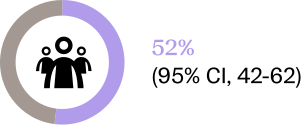
|
| CBRa |
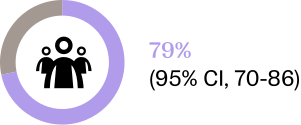
|
| Best response, n(%) | |
| CR | 0 |
| PR | 55 (52) |
| SD | 37 (35) |
| PD | 8 (8) |
| Not evaluable/unknown | 5 (5) |
 Median DoR was 14.1 months (95% CI, 9.5-26.2). |
|
 Median DoR ≥6 months was achieved by 38 (69%) responders. |
|
|
This was a single-arm trial. Results should be
interpreted with caution.
|
|
Investigator-assessed best change from baseline in SoD of target lesions1


This was a single-arm trial. Results should be interpreted with
caution.
Figure reproduced with permission. ©Tomasini P, et al. Amivantamab plus lazertinib in atypical EGFR-mutated advanced
non-small cell lung cancer: results from CHRYSALIS-2. J Clin Oncol. 2026.
DOI https://doi.org/10.1200/JCO-24-02835.


This was a single-arm trial. Results should be interpreted with
caution.
Figures reproduced with permission. ©Tomasini P, et al. Amivantamab plus lazertinib in atypical EGFR-mutated advanced
non-small cell lung cancer: results from CHRYSALIS-2. J Clin Oncol. 2026. DOI https://doi.org/10.1200/JCO-24-02835.
- The median follow-up was 17.3 months (range, 0.1-31.5).1
| Investigator-assessed response | n=49 |
|---|---|
| ORR |
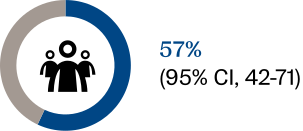
|
| CBRa |
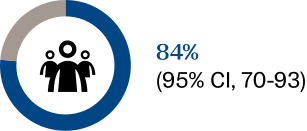
|
| Best response, n (%) | |
| CR | 0 |
| PR | 28 (57) |
| SD | 18 (37) |
| PD | 2 (4) |
| Not evaluable/unknown | 1 (2) |
|
Median DoR was 20.7 months (95% CI, 9.9-NE). |
|
|
Median DoR ≥6 months was achieved by 21 (75%) responders. |
|
|
This was a single-arm trial. Results
should be interpreted with caution. |
|
Investigator-assessed best change from baseline in SoD of target lesions1

This was a single-arm trial. Results should be interpreted with
caution.
Figure reproduced with permission. ©Tomasini P, et al. Amivantamab plus lazertinib in atypical EGFR-mutated advanced
non-small cell lung cancer: results from CHRYSALIS-2. J Clin Oncol. 2026.
DOI https://doi.org/10.1200/JCO-24-02835.
- The median PFS was 19.5 months (95% CI, 11.2-NE).
- The median OS was NE (95% CI, 26.3-NE).
- The median follow-up was 15.4 months (range, 0.3-30.8).1
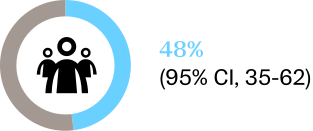
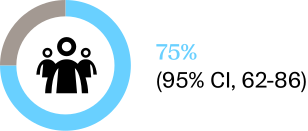
| Investigator-assessed response | n=56 |
|---|---|
| ORR |
|
| CBRa |
|
| Best response, n (%) | |
| CR | 0 |
| PR | 27 (48) |
| SD | 19 (34) |
| PD | 6 (11) |
| Not evaluable/unknown | 4 (7) |
|
Median DoR was 11.0 months (95% CI, 4.5-NE). |
|
|
Median DoR ≥6 months was achieved by 17 (63%) responders. |
|
|
This was a single-arm trial. Results
should be interpreted with caution. |
|
Investigator-assessed best change from baseline in SoD of target lesions1

This was a single-arm trial. Results should be interpreted with
caution.
Figure reproduced with permission. ©Tomasini P, et al. Amivantamab plus lazertinib in atypical EGFR-mutated advanced
non-small cell lung cancer: results from CHRYSALIS-2. J Clin Oncol. 2026. DOI https://doi.org/10.1200/JCO-24-02835.
- The median PFS was 7.8 months (95% CI, 5.4-11.1).
- The median OS was 22.8 months (95% CI, 16.9-NE).
| Participants, n (%) | N=105 |
|---|---|
| Analyzable baseline ctDNA | 73 (70%) |
| Detectable DNAa | 65 (89%) |
| Detectable pathogenic alterationsa | 59 (81%) |
| TP53 comutationsb | 37 (63%) |
|
aParticipants with analyzable baseline
ctDNA (n=73) used as denominator to calculate percentage.
|
|
| Mutation type | Confirmed ORR, % (95% CI) | |
|---|---|---|
| Treatment-naïve subgroup | Previous treatment subgroup | |
| Solitary mutations | 63 (44-79) | 52 (27-67.5) |
| Compound mutations | 47 (23-72) | 33 (10-65) |
|
This was a single-arm trial. Results should be interpreted with caution. |
||
ORR among participants with TP53 mutations1


This was a single-arm trial. Results should be interpreted with caution.
ORR among participants without TP53 mutations1


This was a single-arm trial. Results should be interpreted with caution.
Best response for participants with PACC mutations1


This was a single-arm trial. Results should be interpreted with
caution.
Figure reproduced with permission. ©Tomasini P, et al. Amivantamab plus lazertinib in atypical EGFR-mutated advanced
non-small cell lung cancer: results from CHRYSALIS-2. J Clin Oncol. 2026.
DOI https://doi.org/10.1200/JCO-24-02835.
Best response for participants with classical-like mutations1


This was a single-arm trial. Results should be interpreted with
caution.
Figure reproduced with permission. ©Tomasini P, et al. Amivantamab plus lazertinib in atypical EGFR-mutated advanced
non-small cell lung cancer: results from CHRYSALIS-2. J Clin Oncol. 2026. DOI https://doi.org/10.1200/JCO-24-02835.
Best response for participants with T790M-like mutations1


This was a single-arm trial. Results should be interpreted with
caution.
Figure reproduced with permission. ©Tomasini P, et al. Amivantamab plus lazertinib in atypical EGFR-mutated advanced
non-small cell lung cancer: results from CHRYSALIS-2. J Clin Oncol. 2026.
DOI https://doi.org/10.1200/JCO-24-02835.
aParticipants were further classified using the structure-based approach described by Robichaux JP, et al.8
| Event, n (%) | N=105 | |||
|---|---|---|---|---|
| Any TEAE | 105 (100) | |||
| Any grade ≥3 TEAE | 73 (70) | |||
| Any serious TEAE | 53 (50) | |||
| Any TEAE leading to: | ||||
| Dose interruption of any study agenta | 73 (70) | |||
| Dose reduction of any study agent | 52 (50) | |||
| Discontinuation of any study agent | 29 (28) | |||
|
This was a single-arm trial. Results should be interpreted with caution.
|
||||
| TEAEs (≥10%) by preferred term, n (%) | N=105 | |||
|---|---|---|---|---|
| All grades | Grade ≥3 | |||
| Associated with EGFR inhibition | ||||
| Rash | 70 (67) | 14 (13) | ||
| Paronychia | 70 (67) | 5 (5) | ||
| Stomatitis | 31 (30) | 2 (2) | ||
| Diarrhea | 24 (23) | 0 | ||
| Pruritus | 24 (23) | 0 | ||
| Dermatitis acneiform | 23 (22) | 4 (4) | ||
| Associated with MET inhibition | ||||
| Hypoalbuminemia | 62 (59) | 8 (8) | ||
| Peripheral edema | 38 (36) | 3 (3) | ||
| Other1 | ||||
| IRR | 59 (56) | 4 (4) | ||
| ALT increased | 43 (41) | 2 (2) | ||
| Constipation | 34 (32) | 0 | ||
| Hypocalcemia | 33 (31) | 1 (1) | ||
| AST increased | 32 (30) | 1 (1) | ||
| COVID-19 disease | 31 (30) | 2 (2) | ||
| Anemia | 28 (27) | 3 (3) | ||
| Decreased appetite | 28 (27) | 2 (2) | ||
| Nausea | 27 (26) | 2 (2) | ||
| Asthenia | 26 (25) | 7 (7) | ||
| Blood lactate dehydrogenase increased | 24 (23) | 7 (7) | ||
| Hypokalemia | 20 (19) | 4 (4) | ||
| Thrombocytopenia | 19 (18) | 2 (2) | ||
| Muscle spasms | 18 (17) | 0 | ||
| GGT increased | 18 (17) | 1 (1) | ||
| Cough | 17 (16) | 0 | ||
| Lymphopenia | 17 (16) | 2 (2) | ||
| Fatigue | 16 (15) | 0 | ||
| Pulmonary embolism | 16 (15) | 8 (8) | ||
| Peripheral sensory neuropathy | 16 (15) | 0 | ||
| Vomiting | 16 (15) | 0 | ||
| Pneumonia | 15 (14) | 10 (10) | ||
| Dizziness | 15 (14) | 3 (3) | ||
| Blood creatine phosphokinase increased | 15 (14) | 2 (2) | ||
| Hypomagnesemia | 15 (14) | 0 | ||
| Hypophosphatasemia | 15 (14) | 0 | ||
| Myalgia | 15 (14) | 0 | ||
| Paresthesia | 15 (14) | 0 | ||
| Neutropenia | 14 (13) | 1 (1) | ||
| Dry skin | 14 (13) | 0 | ||
| Hyponatremia | 14 (13) | 1 (1) | ||
| Dyspnea | 13 (12) | 6 (6) | ||
| Headache | 13 (12) | 0 | ||
| Pyrexia | 13 (12) | 0 | ||
| Blood creatinine increased | 12 (11) | 0 | ||
| Hyperglycemia | 12 (11) | 0 | ||
| Back pain | 11 (11) | 1 (1) | ||
| Blood alkaline phosphatase increased | 11 (11) | 0 | ||
| Insomnia | 11 (11) | 0 | ||
| Leukopenia | 11 (11) | 0 | ||
|
This was a single-arm trial. Results should be interpreted with caution. |
||||
Primary publication:
Financial disclosures:
- Pascale Tomasini: Consulting or Advisory Role: AstraZeneca, Roche, Bristol Myers Squibb Foundation, Takeda, Amgen, Janssen, Daiichi Sankyo Europe GmbH; Travel, Accommodations, Expenses: Bristol Myers Squibb/Pfizer, AstraZeneca, Takeda, Daiichi Sankyo Europe GmbH.
- Enriqueta Felip: Consulting or Advisory Role: AbbVie, Amgen, AstraZeneca, Bayer, Boehringer Ingelheim, Bristol Myers Squibb, Roche, Gilead Sciences, GlaxoSmithKline, Merck Sharp & Dohme, Novartis, Pfizer, Regeneron, Daiichi Sankyo Europe GmbH, ITeos Therapeutics, Johnson & Johnson/Janssen, Pierre Fabre, Turning Point Therapeutics; Speakers’ Bureau: Amgen, AstraZeneca, Bristol Myers Squibb, Daiichi Sankyo, Roche, Genentech, Medical Trends, Medscape, Merck Serono, Merck Sharp & Dohme, Peervoice, Pfizer, Gilead Sciences, Johnson & Johnson/Janssen, Novartis, Regeneron, Lilly; Travel, Accommodations, Expenses: AstraZeneca, Janssen, Roche; Other Relationship: GRIFOLS; Uncompensated Relationships: Member of the Scientific Advisory Committee—Hospital Universitari Parc Taulí—SEOM (Sociedad Española de Oncología Médica), President from 2021 to 2023, “ETOP IBCSG Partners” Member of the Scientific Committee, “Medical writing assistance for this abstract was provided by Nimisha H. Bhoola, PhD, of Nucleus Global, an Inizio Company, and funded by F. Hoffmann-La Roche Ltd.”
- Benjamin Besse: Honoraria: AbbVie (Inst), MSD (Inst), AstraZeneca (Inst), Daiichi Sankyo (Inst), Sanofi/Aventis (Inst), Bristol Myers Squibb (Inst), Lilly (Inst), OSE Immunotherapeutics (Inst), SERVIER (Inst); Consulting or Advisory Role: F. Hoffmann LaRoche (Inst), PharmaMar (Inst), Sanofi/Aventis (Inst), AbbVie (Inst), Lilly (Inst), Ellipses Pharma (Inst), BioNTech SE (Inst), Bristol Myers Squibb (Inst), CureVac (Inst), Regeneron (Inst), Immunocore (Inst), Owkin (Inst), Beijin Avistone (Inst), Foghorn Therapeutics (Inst); Research Funding: Genmab (Inst), PharmaMar (Inst), Enliven Therapeutics (Inst), Prelude Therapeutics (Inst), Takeda (Inst), BeiGene (Inst), OSE Immunotherapeutics (Inst), Anheart Therapeutics (Inst), AstraZeneca (Inst), Amgen (Inst), CureVac (Inst), Janssen (Inst), MSD (Inst), Sanofi (Inst), Lilly (Inst), Daiichi Sankyo Europe GmbH (Inst).
- Alexander I. Spira: Leadership: Next Oncology (Inst); Honoraria: CytomX Therapeutics, AstraZeneca/MedImmune, Merck, Takeda, Amgen, Janssen Oncology, Novartis, Bristol Myers Squibb, Bayer, Prelude Therapeutics, AbbVie, Astellas Pharma; Consulting or Advisory Role: incyte, Amgen, Novartis, AstraZeneca/ MedImmune (Inst), Mirati Therapeutics, Gritstone Bio, Jazz Pharmaceuticals, Merck (Inst), Bristol Myers Squibb (Inst), Takeda, Janssen Research & Development, Mersana, Blueprint Medicines (Inst), Gritstone Bio, Daiichi Sankyo/AstraZeneca, Regeneron, Lilly, Black Diamond Therapeutics, Sanofi, ArriVent Biopharma, Synthekine, GlaxoSmithKline, CRISPR Therapeutics, Revolution Medicines; Research Funding: Roche (Inst), AstraZeneca (Inst), Boehringer Ingelheim (Inst), Astellas Pharma (Inst), MedImmune (Inst), Novartis (Inst), Incyte (Inst), AbbVie (Inst), Ignyta (Inst), Takeda (Inst), Macrogenics (Inst), CytomX Therapeutics (Inst), LAM Therapeutics, Astex Pharmaceuticals (Inst), Bristol Myers Squibb (Inst), Loxo (Inst), Gritstone Bio (Inst), Plexxikon (Inst), Amgen (Inst), Loxo (Inst), Daiichi Sankyo (Inst), ADC Therapeutics (Inst), Janssen Oncology (Inst), Rubius Therapeutics (Inst), Synthekine (Inst), mersana (Inst), Blueprint Medicines (Inst), Regeneron (Inst), Alkermes (Inst), Revolution Medicines (Inst), Medikine (Inst), Black Diamond Therapeutics (Inst), BluPrint Oncology (Inst), nalo therapeutics (Inst), Scorpion Therapeutics (Inst), ArriVent Biopharma (Inst), Revolution Medicines (Inst), Prelude Therapeutics (Inst), Lilly (Inst).
- Joel W. Neal: Stock and Other Ownership Interests: SecondLook Health; Honoraria: Research to Practice, Medscape, Projects in Knowledge, MJH Life Sciences, Medical Educator Consortium, PlatformQ/Medlive CME, IDEOlogy Health, Navya Network Inc; Consulting or Advisory Role: AstraZeneca, Genentech/Roche, Takeda, Lilly, Amgen, Iovance Biotherapeutics, Blueprint Medicines, Regeneron, Natera, Gilead Sciences, AbbVie, Summit Therapeutics, Novartis, Novocure, Janssen Oncology, Anheart Therapeutics, Bristol Myers Squibb, Nuvation Bio, Boehringer Ingelheim, Daiichi Sankyo, GlaxoSmithKline, Oxford BioTherapeutics, Taiho Pharmaceutical; Research Funding: Genentech/Roche (Inst), Merck (Inst), Novartis (Inst), Boehringer Ingelheim (Inst), Exelixis (Inst), Nektar (Inst), Takeda (Inst), Adaptimmune (Inst), GlaxoSmithKline (Inst), Janssen (Inst), Revolution Medicines, Nuvalent, Inc; Patents, Royalties, Other Intellectual Property: Up To Date—Royalties.
- Koichi Goto: Honoraria: Amgen, Amoy Diagnostics, AstraZeneca Japan, Bristol Myers Squibb K.K, Chugai Pharma, Daiichi Sankyo Co, Ltd, Eisai, Lilly Japan, Janssen, Merck, Novartis, Ono Pharmaceutical, Taiho Pharmaceutical, Takeda, Thermo Fisher Scientific, Sysmex, ArriVent Biopharma, Inc, Bristol Myers Squibb K.K, Boehringer Ingelheim; Consulting or Advisory Role: Lilly Japan, Amgen, Bristol Myers Squibb K.K, Daiichi Sankyo Co, Ltd, GlaxoSmithKline K.K, Haihe Biopharma Co, Ltd, Bayer HealthCare Pharmaceuticals Inc, Guardant Health Japan Corp, iTeos Therapeutics Inc, Novartis, Pharma Mar, S.A, Amplity, Inc, ArriVent Biopharma, Inc, Nippon Boehringer Ingelheim, Boehringer Ingelheim, Pfizer, Taiho Pharmaceutical; Research Funding: Medical & Biological Laboratories Co, Ltd (Inst), Kyowa Kirin Co, Ltd (Inst), Merus (Inst), Spectrum Pharmaceuticals (Inst), MSD K.K (Inst), AstraZeneca Japan (Inst), Taiho Pharmaceutical (Inst), Chugai Pharma (Inst), Boehringer Ingelheim (Inst), Ono Pharmaceutical (Inst), Takeda (Inst), Eisai (Inst), Lilly Japan (Inst), Bristol Myers Squibb K.K (Inst), Ignyta (Inst), Janssen (Inst), Loxo (Inst), Daiichi Sankyo Co, Ltd (Inst), Turning Point Therapeutics (Inst), Novartis (Inst), Blueprint Medicines (Inst), Bayer Yakuhin (Inst), Amgen (Inst), HaiHe Biopharma Co, Ltd (Inst), Sumitomo Pharma Co, Ltd (Inst), Pfizer (Inst), CRAIF Inc (Inst), Riken Genesis Co, Ltd (Inst), AnHeart Therapeutics Inc (Inst), Guardant Health Asia, Middle East & Africa, Inc (Inst), Lunit (Inst), AbbVie Inc, (Inst), ArriVent Biopharma, Inc (Inst), AccuraGen Inc (Inst), BillionToOne, Inc (Inst), Nippon Kayaku (Inst), Nippon Kayaku (Inst).
- Christina S. Baik: Consulting or Advisory Role: AstraZeneca, Pfizer, Janssen, Boehringer Ingelheim, Daiichi Sankyo/UCB Japan, Genentech/Roche, Bristol Myers Squibb Foundation, Natera, Takeda, Regeneron; Research Funding: AstraZeneca (Inst), Pfizer (Inst), Blueprint Medicines (Inst), Daiichi Sankyo (Inst), AbbVie (Inst), TP Therapeutics (Inst), Lilly (Inst), Janssen (Inst), Nuvalent, Inc (Inst), Boehringer Ingelheim (Inst), Black Diamond Therapeutics (Inst), Bristol Myers Squibb Foundation (Inst), Ellipses Pharma (Inst).
- Melina E. Marmarelis: Stock and Other Ownership Interests: Merck, Johnson & Johnson; Honoraria: Janssen Oncology, Takeda; Consulting or Advisory Role: AstraZeneca, Bristol Myers Squibb/Celgene, Janssen Oncology, Daiichi Sankyo/AstraZeneca, Boehringer Ingelheim, NEUVOGEN, Bayer; Research Funding: Lilly (Inst), AstraZeneca (Inst), Janssen Oncology (Inst), Ikena Oncology (Inst), Genentech (Inst), Merck (Inst); Travel, Accommodations, Expenses: Regeneron; Open Payments Link: https://openpaymentsdata.cms.gov/physician/856967.
- Eiki Ichihara: Honoraria: AstraZeneca, Takeda, Pfizer, Novartis, Chugai Pharma, Merck, Janssen, Kyowa Kirin International, Daiichi Sankyo/UCB Japan; Research Funding: Janssen.
- Se-Hoon Lee: Honoraria: AstraZeneca/MedImmune, Roche, Lilly, Amgen, Yuhan, Merck Sharp & Dohme, Bristol Myers Squibb Foundation; Consulting or Advisory Role: AstraZeneca, Roche, Pfizer, Lilly, BMS/Ono, Takeda, Janssen, IMBdx, Abion, BeiGene, Daiichi Sankyo, ImmuneOncia, Merck (German), Merck Sharp & Dohme, Novartis; Speakers’ Bureau: Abion; Research Funding: AstraZeneca (Inst), Lunit (Inst), Merck Sharp & Dohme (Inst), Daiichi Sankyo.
- James Chih-Hsin Yang: Honoraria: Boehringer Ingelheim (Inst), Takeda (Inst), Pfizer (Inst), Amgen (Inst), AstraZeneca/MedImmune (Inst), Roche/Genentech (Inst), Daiichi Sankyo/AstraZeneca (Inst), MSD Oncology (Inst); Consulting or Advisory Role: AstraZeneca (Inst), Lilly (Inst), MSD Oncology (Inst), Daiichi Sankyo (Inst), Amgen (Inst), Takeda (Inst), MSD Oncology (Inst), Janssen Oncology (Inst), Daiichi Sankyo/AstraZeneca (Inst), AbbVie (Inst), ArriVent Biopharma (Inst); Research Funding: AstraZeneca (Inst); Travel, Accommodations, Expenses: AstraZeneca, Dizal Pharma, Takeda.
- Sebastian Michels: Honoraria: AstraZeneca, Janssen Oncology, Takeda, BeiGene, Bristol Myers Squibb; Consulting or Advisory Role: AstraZeneca, Janssen Oncology, Takeda, BeiGene, Bristol Myers Squibb; Research Funding: Pfizer (Inst), Novartis (Inst), Bristol Myers Squibb (Inst); Travel, Accommodations, Expenses: Janssen Oncology, Lilly, BeiGene, Takeda.
- Zacharias Anastasiou: Employment: Johnson & Johnson/Janssen; Stock and Other Ownership Interests: Johnson & Johnson/Janssen.
- Joshua C. Curtin: Employment: Janssen Research & Development; Stock and Other Ownership Interests: Johnson & Johnson/Janssen.
- Xuesong Lyu: Employment: Johnson & Johnson/Janssen; Stock and Other Ownership Interests: Johnson & Johnson/Janssen.
- Janine Mahoney: Employment: Johnson & Johnson/Janssen; Leadership: Johnson & Johnson/Janssen; Stock and Other Ownership Interests: Johnson & Johnson/Janssen; Research Funding: Johnson & Johnson/Janssen; Travel, Accommodations, Expenses: Johnson & Johnson/Janssen.
- Levon Demirdjian: Employment: Johnson & Johnson; Stock and Other Ownership Interests: Johnson & Johnson; Research Funding: Johnson & Johnson; Travel, Accommodations, Expenses: Johnson & Johnson.
- Craig S. Meyer: Employment: Johnson & Johnson/Janssen; Stock and Other Ownership Interests: Johnson & Johnson/Janssen.
- Youyi Zhang: Employment: Johnson & Johnson/Janssen; Stock and Other Ownership Interests: Johnson & Johnson/Janssen.
- Isabelle Leconte: Employment: Johnson & Johnson/Janssen; Stock and Other Ownership Interests: Johnson & Johnson/Janssen; Travel, Accommodations, Expenses: Johnson & Johnson/Janssen.
- Patricia Lorenzini: Employment: Janssen Pharmaceuticals of Johnson & Johnson.
- Roland E. Knoblauch: Employment: Johnson & Johnson; Stock and Other Ownership Interests: Johnson & Johnson; Research Funding: Johnson & Johnson Interventional Oncology; Travel, Accommodations, Expenses: Johnson & Johnson.
- Leonardo Trani: Employment: Johnson & Johnson; Stock and Other Ownership Interests: Johnson & Johnson.
- Mahadi Baig: Employment: Johnson & Johnson/Janssen; Stock and Other Ownership Interests: Johnson & Johnson/Janssen.
- Joshua M. Bauml: Employment: Janssen Research & Development; Stock and Other Ownership Interests: Janssen Research & Development.
- Byoung Chul Cho: Employment: Yonsei University Health System; Leadership: J INTS BIO; Stock and Other Ownership Interests: Theravance, Gencurix, Bridgebio, Kanaph Therapeutics, Cyrus therapeutics, Interpark Bio, J INTS BIO; Consulting or Advisory Role: AstraZeneca, Boehringer Ingelheim, Roche, Yuhan, Pfizer, Janssen, Takeda, MSD, Lilly, Novartis, CJ bioscience, BeiGene, BMS, Ono Pharmaceutical, Cyrus therapeutics, Gilead Sciences, Amgen, Daiichi Sankyo, Regeneron, Sanofi, AnHeart Therapeutics, Seagen, Harpoon Therapeutics, GlaxoSmithKline, ArriVent Biopharma, Bridgebio, Kanaph Therapeutics, Guardant Health, J INTS BIO, Therapex Co, Ltd; Research Funding: AstraZeneca, Dong-A ST, Champions Oncology, Janssen, Yuhan, MSD, GI Innovation, CJ bioscience, Cyrus Therapeutics, ImmuneOncia, Therapex, J INTS BIO, Vertical Bio AG; Patents, Royalties, Other Intellectual Property: Champions Oncology, Crown Bioscience, Imagen, PearlRiver Bio GmbH; Other Relationship: DAAN Biotherapeutics.
- No other potential conflicts of interest were reported.
- Tomasini P, Wang Y, Li Y, et al. Amivantamab plus lazertinib in atypical EGFR-mutated advanced non-small cell lung cancer: results From CHRYSALIS-2. J Clin Oncol. 2026;44(1):54-65.
- RYBREVANT® [Prescribing Information]. Horsham, PA: Janssen Biotech, Inc.
- LAZCLUZE® [Prescribing Information]. Horsham, PA: Janssen Biotech, Inc.
- Cho BC, et al. Amivantamab plus lazertinib in atypical EGFR-mutated advanced non-small cell lung cancer (NSCLC): results from CHRYSALIS-2. Presented at: American Society of Clinical Oncology (ASCO) Annual Meeting; May 31-June 4, 2024; Chicago, IL, USA.
- Cho BC, Lu S, Felip E, et al. Amivantamab plus lazertinib in previously untreated EGFR-mutated advanced NSCLC. N Engl J Med. 2024;391(16):1486-1498.
- Cho BC, Kim DW, Spira AI, et al. Amivantamab plus lazertinib in osimertinib-relapsed EGFR-mutant advanced non-small cell lung cancer: a phase 1 trial. Nat Med. 2023;29(10):2577-2585.
- Shu CA, Goto K, Ohe Y, et al. Amivantamab and lazertinib in patients with EGFR-mutant non–small cell lung (NSCLC) after progression on osimertinib and platinum-based chemotherapy: updated results from CHRYSALIS-2 [abstract]. J Clin Oncol. 2022;40(suppl 16):abstr 9006.
- Robichaux JP, Le X, Vijayan RSK, et al. Structure-based classification predicts drug response in EGFR-mutant NSCLC. Nature. 2021;597(7878):732-737.
| 2L | Second-line | MET | Mesenchymal epithelial transition |
|---|---|---|---|
| AE | Adverse event | NE | Not estimable |
| ALT | Alanine aminotransferase | NGS | Next-generation sequencing |
| ASCO | American Society of Clinical Oncology | NSCLC | Non-small cell lung cancer |
| AST | Aspartate aminotransferase | ORR | Overall response rate |
| bib | Best investigator-assessed change from baseline | OS | Overall survival |
| BICR | Blinded Independent Central Review | PACC | P-loop and αC-helix compressing |
| CBR | Clinical benefit rate | PD | Progressive disease |
| CI | Confidence interval | PE | Pulmonary embolism |
| COVID-19 | Coronavirus disease 2019 | PFS | Progression-free survival |
| CR | Complete response | PO | Orally |
| ctDNA | Circulating tumor DNA | PR | Partial response |
| CYP3A4 | Cytochrome P450 3A4 | Q2W | Every 2 weeks |
| DoR | Duration of response | QD | Daily |
| ECOG PS | Eastern Cooperative Oncology Group performance status | QW | Once weekly |
| EGFR | Epidermal growth factor receptor | RECIST | Response Evaluation Criteria in Solid Tumors |
| Ex19del | Exon 19 deletion | SD | Stable disease |
| Ex20ins | Exon 20 insertion | SoC | Standard of care |
| FDA | US Food and Drug Administration | SoD | Sum of diameters |
| G360 | Guardant360® panel | TEAE | Treatment-emergent adverse event |
| GGT | Gamma-glutamyl transferase | TEN | Toxic epidermal necrolysis |
| IHC | Immunohistochemistry | TKI | Tyrosine kinase inhibitor |
| ILD | Interstitial lung disease | TP53 | Tumor protein p53 |
| IQR | Interquartile range | UVA | Ultraviolet A |
| IRR | Infusion-related reaction | UVB | Ultraviolet B |
| IV | Intravenous | VTE | Venous thromboembolism |
| LOT | Line of therapy |