
RYBREVANT FASPRO™ is a combination of amivantamab, a bispecific EGFR-directed and MET receptor-directed antibody, and hyaluronidase, an endoglycosidase indicated:
- in combination with lazertinib for the first-line treatment of adult patients with locally advanced or metastatic NSCLC with EGFR exon 19 deletions or exon 21 L858R substitution mutations, as detected by an FDA-approved test.
- in combination with carboplatin and pemetrexed for the treatment of adult patients with locally advanced or metastatic NSCLC with EGFR exon 19 deletions or exon 21 L858R substitution mutations, whose disease has progressed on or after treatment with an EGFR tyrosine kinase inhibitor.
- in combination with carboplatin and pemetrexed for the first-line treatment of adult patients with locally advanced or metastatic NSCLC with EGFR exon 20 insertion mutations, as detected by an FDA-approved test.
- as a single agent for the treatment of adult patients with locally advanced or metastatic NSCLC with EGFR exon 20 insertion mutations, as detected by an FDA-approved test, whose disease has progressed on or after platinum-based chemotherapy.
Contraindications2:
RYBREVANT FASPRO™ is contraindicated in patients with known hypersensitivity to hyaluronidase or to any of its excipients.
Warnings and precautions2:
 Hypersensitivity and administration-related reactions
RYBREVANT FASPRO™ can cause hypersensitivity and ARR; signs and symptoms of ARR include dyspnea, flushing, fever, chills, chest discomfort, hypotension, and vomiting. The median time to ARR onset is approximately 2 hours.
In PALOMA-3, in 206 patients who received RYBREVANT FASPRO™ in combination with lazertinib, all Grade ARR occurred in 13%, including 0.5% Grade 3. Of the patients who experienced ARR, 89% occurred with the initial dose (Week 1, Day 1).
Premedicate with antihistamines, antipyretics, and glucocorticoids and administer RYBREVANT FASPRO™ as recommended. Monitor patients for any signs and symptoms of ARR during injection in a setting where cardiopulmonary resuscitation medication and equipment are available. Interrupt RYBREVANT FASPRO™ injection, if ARR is suspected. Resume treatment upon resolution of symptoms or permanently discontinue RYBREVANT FASPRO™ based on severity.
 Interstitial lung disease/pneumonitis
RYBREVANT FASPRO™ can cause severe and fatal ILD/pneumonitis.
In PALOMA-3, in 206 patients who received RYBREVANT FASPRO™ in combination with lazertinib, ILD/pneumonitis occurred in 6%, including Grade 3 in 1%, Grade 4 in 1.5%, and fatal cases in 1.9%. In total, 5% of patients permanently discontinued RYBREVANT FASPRO™ and lazertinib due to ILD/pneumonitis.
In MARIPOSA, in 421 patients who received intravenous amivantamab in combination with lazertinib, ILD/pneumonitis occurred in 3.1%, including Grade 3 in 1% and Grade 4 in 0.2% of patients. There was one fatal case of ILD/pneumonitis and 2.9% of patients permanently discontinued intravenous amivantamab and lazertinib due to ILD/pneumonitis.
Based on the pooled safety population, in 281 patients who received intravenous amivantamab in combination with carboplatin and pemetrexed, ILD/pneumonitis occurred in 2.1%, including 1.8% Grade 3 ILD/pneumonitis. Of these, 2.1% of patients permanently discontinued intravenous amivantamab due to ILD/pneumonitis.
In CHRYSALIS, in 302 patients who received intravenous amivantamab as a single agent, ILD/pneumonitis occurred in 3.3%, including 0.7% Grade 3. Three patients (1%) permanently discontinued intravenous amivantamab due to ILD/pneumonitis.
Monitor patients for new or worsening symptoms indicative of ILD/pneumonitis (e.g., dyspnea, cough, fever). Immediately withhold RYBREVANT FASPRO™ in patients with suspected ILD/pneumonitis and permanently discontinue if ILD/pneumonitis is confirmed.
 Venous thromboembolic events with concomitant use with lazertinib
RYBREVANT FASPRO™ in combination with lazertinib can cause serious and fatal VTE, including deep vein thrombosis and pulmonary embolism. Without prophylactic anticoagulation, the majority of these events occurred during the first four months of therapy.
In PALOMA-3, in the 206 patients who received RYBREVANT FASPRO™ in combination with lazertinib, all Grade VTE occurred in 11% and 1.5% were Grade 3. Of the 206 patients treated with RYBREVANT FASPRO™ in combination with lazertinib, 80% received prophylactic anticoagulation at study entry. In the 164 patients treated with RYBREVANT FASPRO™ in combination with lazertinib who received prophylactic anticoagulation, all Grade VTE occurred in 7%. In the 42 patients treated with RYBREVANT FASPRO™ in combination with lazertinib who did not receive prophylactic anticoagulation, all Grade VTE occurred in 17%. In total, 0.5% of patients had VTE leading to dose reductions of RYBREVANT FASPRO™ and no patients required permanent discontinuation. The median time to onset of VTEs was 95 days (range: 17 to 390).
In MARIPOSA, in 421 patients who received intravenous amivantamab in combination with lazertinib, VTEs occurred in 36%, including Grade 3 in 10% and Grade 4 in 0.5% of patients. On-study VTEs occurred in 1.2% of patients (n=5) while receiving anticoagulation therapy. There were two fatal cases of VTE (0.5%), 9% of patients had VTE leading to dose interruptions of intravenous amivantamab, 1% of patients had VTE leading to dose reductions of intravenous amivantamab, and 3.1% of patients had VTE leading to permanent discontinuation of intravenous amivantamab. The median time to onset of VTEs was 84 days (range: 6 to 777).
Administer prophylactic anticoagulation for the first four months of treatment. The use of vitamin K antagonists is not recommended.
Monitor for signs and symptoms of VTE events and treat as medically appropriate. Withhold RYBREVANT FASPRO™ and lazertinib based on severity. Once anticoagulant treatment has been initiated, resume RYBREVANT FASPRO™ and lazertinib at the same dose level at the discretion of the healthcare provider. In the event of VTE recurrence despite therapeutic anticoagulation, permanently discontinue RYBREVANT FASPRO™. Treatment can continue with lazertinib at the same dose level at the discretion of the healthcare provider.
 Dermatologic adverse reactions
RYBREVANT FASPRO™ can cause severe rash including TEN, dermatitis acneiform, pruritus and dry skin.
In PALOMA-3, in the 206 patients who received RYBREVANT FASPRO™ in combination with lazertinib, rash occurred in 80% of patients, including Grade 3 in 17% and Grade 4 in 0.5%. Rash leading to dose reduction occurred in 11% of patients, and RYBREVANT FASPRO™ was permanently discontinued due to rash in 1.5% of patients.
In MARIPOSA, in 421 patients who received intravenous amivantamab in combination with lazertinib, rash occurred in 86%, including 26% Grade 3. The median time to onset of rash was 14 days (range: 1 to 556 days). Rash leading to dose interruptions of intravenous amivantamab occurred in 37% of patients, rash leading to dose reductions of intravenous amivantamab occurred in 23% of patients, and rash leading to permanent discontinuation of intravenous amivantamab occurred in 5% of patients.
Based on the pooled safety population, in 281 patients who received intravenous amivantamab in combination with carboplatin and pemetrexed, rash occurred in 82%, including 15% Grade 3. Rash leading to dose reductions occurred in 14% of patients, and 2.5% permanently discontinued intravenous amivantamab and 3.1% discontinued pemetrexed.
In CHRYSALIS, in 302 patients who received intravenous amivantamab as a single agent, rash occurred in 74%, including 3.3% Grade 3. The median time to onset of rash was 14 days (range: 1 to 276 days). Rash leading to dose reduction occurred in 5% of patients, and intravenous amivantamab was permanently discontinued due to rash in 0.7% of patients. TEN occurred in one patient (0.3%) treated with intravenous amivantamab as a single agent.
When initiating treatment with RYBREVANT FASPRO™, prophylactic and concomitant medications are recommended to reduce the risk and severity of dermatologic adverse reactions. Instruct patients to limit sun exposure during and for 2 months after treatment with RYBREVANT FASPRO™. Advise patients to wear protective clothing and use broad-spectrum UVA/UVB sunscreen.
If skin reactions develop, administer supportive care including topical corticosteroids and topical and/or oral antibiotics. For Grade 3 reactions, add oral steroids and consider dermatologic consultation. Promptly refer patients presenting with severe rash, atypical appearance or distribution, or lack of improvement within 2 weeks to a dermatologist. Withhold, dose reduce or permanently discontinue RYBREVANT FASPRO™ based on severity.
 Ocular toxicity
RYBREVANT FASPRO™ can cause ocular toxicity including keratitis, blepharitis, dry eye symptoms, conjunctival redness, blurred vision, visual impairment, ocular itching, eye pruritus and uveitis.
In PALOMA-3, in the 206 patients who received RYBREVANT FASPRO™ in combination with lazertinib, all Grade ocular toxicity occurred in 13%, including 0.5% Grade 3.
In MARIPOSA, in 421 patients treated with intravenous amivantamab in combination with lazertinib, ocular toxicity occurred in 16%, including 0.7% Grade 3 or 4 ocular toxicity.
Based on the pooled safety population, in 281 patients who received intravenous amivantamab in combination with carboplatin and pemetrexed, ocular toxicity occurred in 16%. All events were Grade 1 or 2.
In CHRYSALIS, in 302 patients treated with intravenous amivantamab, keratitis occurred in 0.7% and uveitis occurred in 0.3%. All events were Grade 1-2.
Promptly refer patients presenting with new or worsening eye symptoms to an ophthalmologist. Withhold, dose reduce or permanently discontinue RYBREVANT FASPRO™ based on severity.
 Embryo-fetal toxicity
Based on its mechanism of action and findings from animal models, RYBREVANT FASPRO™ can cause fetal harm when administered to a pregnant woman. Administration of other EGFR inhibitor molecules to pregnant animals has resulted in an increased incidence of impairment of embryo-fetal development, embryo lethality, and abortion. Verify pregnancy status of females of reproductive potential prior to initiating RYBREVANT FASPRO™. Advise pregnant women and females of reproductive potential of the potential risk to the fetus. Advise female patients of reproductive potential to use effective contraception during treatment and for 3 months after the last dose of RYBREVANT FASPRO™.
 Adverse reactions
In PALOMA-3, among 206 patients who received RYBREVANT FASPRO™ in combination with lazertinib, the most common adverse reactions (≥ 20%) were rash, nail toxicity, musculoskeletal pain, fatigue, stomatitis, edema, nausea, diarrhea, vomiting, constipation, decreased appetite, and headache. The most common Grade 3 or 4 laboratory abnormalities (≥ 2%) were decreased lymphocyte count, decreased sodium, decreased potassium, decreased albumin, increased ALT, increased AST, decreased platelet count, increased GGT, and decreased hemoglobin.
In MARIPOSA, among 421 patients who received intravenous amivantamab in combination with lazertinib, the most common adverse reactions (≥ 20%) were rash, nail toxicity, infusion-related reaction, musculoskeletal pain, stomatitis, edema, VTE, paresthesia, fatigue, diarrhea, constipation, COVID-19, hemorrhage, dry skin, decreased appetite, pruritus, and nausea. The most common Grade 3 or 4 laboratory abnormalities (≥ 2%) were decreased albumin, decreased sodium, increased ALT, decreased potassium, decreased hemoglobin, increased AST, increased GGT, and increased magnesium.
Among 281 patients who received intravenous amivantamab in combination with carboplatin and pemetrexed, the most common adverse reactions (≥ 20%) were rash, nail toxicity, infusion-related reaction, fatigue, nausea, stomatitis, constipation, edema, decreased appetite, musculoskeletal pain, vomiting, and COVID-19. The most common Grade 3 or 4 laboratory abnormalities (≥ 2%) were decreased neutrophils, decreased leukocytes, decreased platelets, decreased hemoglobin, decreased potassium, decreased sodium, increased ALT, increased GGT, and decreased albumin.
In CHRYSALIS, among 302 patients who received intravenous amivantamab as a single agent, the most common adverse reactions (≥ 20%) were rash, infusion-related reaction, paronychia, musculoskeletal pain, dyspnea, nausea, edema, cough, fatigue, stomatitis, constipation, vomiting, and pruritus. The most common Grade 3 or 4 laboratory abnormalities (≥ 2%) were increased GGT, decreased sodium, decreased potassium, and increased alkaline phosphatase.
 Eligibility criteria for cohort 11,3,4
- R/M HNSCC
- No prior anti-EGFR therapy
- ECOG PS score: 0 or 1
- P16 positive oropharyngeal cancer was excluded
-
In this single-arm trial evaluating in R/M HNSCC, patients received RYBREVANT
FASPRO™ at 2400 mg (or 3360 mg for
body weight
≥80 kg) Q3W as follows1,3,4:
- Each cycle is 21 days (3 weeks); Cycle 1: 1600 mg (or 2240 mg if ≥80 kg) on Day 1, 2400 mg (or 3360 mg if ≥80 kg) on Day 8 and Day 15; Cycle 2 (and thereafter): 2400 mg (or 3360 mg if ≥80 kg) on Day 1.
Cohort 1: RYBREVANT FASPRO™ monotherapy1,3,4,a
Post-PD-1/PD-(L)1 inhibitor and platinum-based chemotherapy
Cohort 2: RYBREVANT FASPRO™ plus pembrolizumab1,3,4,a
Treatment naïve in the R/M setting
Cohort 3: RYBREVANT FASPRO™ plus paclitaxel1,3,4,a
Post-PD-(L)1 inhibitor
Cohort 4: RYBREVANT FASPRO™ monotherapy1,3,4,b
Post-PD-(L)1 inhibitor and platinum-based chemotherapy
Cohort 5: RYBREVANT FASPRO™ plus pembrolizumab with carboplatin 1,3,4,b
Treatment naïve in the R/M setting
Cohort 6: RYBREVANT FASPRO™ plus pembrolizumab5,a
Treatment-naïve in the locally advanced, perioperative setting
aParticipants with HPV-positive oropharyngeal squamous cell cancer were
excluded.
bParticipants with HPV-positive oropharyngeal squamous cell cancer were
included.
cThe INTERLINK-1 data, which showed an ORR of 24% with cetuximab, were not
available at the time of protocol/study initiation.
 Primary endpoint1,3,4,a
- ORR
 Secondary endpoints1,3,4,a
- DoR
- CBRb
- PFS
- OS
- Safety
aResponses were assessed by the investigator per RECIST v1.1 and confirmed
via BICR.
bCBR was defined as the percentage of confirmed responders or durable stable
disease (at the second disease assessment).
- At a data cutoff of March 18, 2026, 102 participants have received at least one dose
of RYBREVANT FASPRO™1
- All participants had received prior systemic treatment.
- Treatment was ongoing for 31% (32/102) of participants at data cutoff.
Demographics1:

| Characteristic, n (%) |
Safety population (N=102) |
|---|---|
| Age, median (range) | 63 years (30-81) |
| Male / female | 79 (77) / 23 (23) |
| Race | |
| Asian | 45 (44) |
| White | 42 (41) |
| Othera | 15 (15) |
Baseline disease characteristics, n (%)1:


Primary tumor location, n (%)1:


| Characteristic |
Safety population (N=102)1 |
|---|---|
| Age, years, category, n (%) | |
| <65 | 56 (55) |
| ≥65 to <75 | 35 (34) |
| ≥75 | 11 (11) |
| Race, n (%) | |
| Asian | 45 (44) |
| White | 42 (41) |
| Black or African American | 1 (1) |
| Not reported/UNK | 14 (14) |
| Region, n (%) | |
| Eastern Asia | 42 (41) |
| North America | 29 (28) |
| Europe | 29 (28) |
| Southeastern Asia | 2 (2) |
| Body weight, kg | |
| Median (range) | 61.5 (40–96) |
| Category, n (%) | |
| <80 kg | 93 (91) |
| ≥80 kg | 9 (9) |
| ECOG PS, n (%) | |
| 0 | 34 (33) |
| 1 | 68 (67) |
| History of smoking, n (%) | |
| Yes | 72 (71) |
| No | 30 (29) |
| Time from initial head and neck diagnosis, months, median (range) | 21.2 (3.2–269.7) |
| Time from recurrent/metastatic disease diagnosis, months, median (range) | 8.9 (0.4–43.7) |
| Primary tumor location, n (%) | |
| Oral cavity | 48 (47) |
| Larynx | 24 (24) |
| Hypopharynx | 16 (16) |
| Oropharynx | 14 (14) |
| Stage at screening, n (%) | |
| III | 4 (4) |
| IVA | 22 (22) |
| IVB | 11 (11) |
| IVC | 65 (64) |
| Site of recurrence/metastasis, n (%)c | |
| Head and neck | 66 (65) |
| Lung | 53 (52) |
| Local lymph node | 40 (39) |
| Distant lymph node | 24 (24) |
| Bone | 12 (12) |
| Liver | 7 (7) |
| Skin | 3 (3) |
| Other | 19 (19) |
| Participants with ≥1 prior therapy, n (%) | |
| Prior systemic therapy | 102 (100) |
| 1 prior line of therapy | 53 (52) |
| 2 prior lines of therapy | 49 (48) |
aOther includes: Black or African-American (n=1), Not reported/UNK
(n=14).
bParticipants with HPV-positive oropharyngeal squamous cell cancer were
excluded.
cParticipants can be counted in >1 category.
 Study limitations for cohort 11
- Single-arm, non-randomized study design
- Study underrepresented Black or African American participants
- Small sample size (n=102) may limit application of findings to a general population
- Median follow-up time of 11.8 months limits interpretation of safety findings and survival outcomes
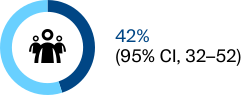
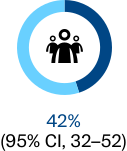
| BICR-assessed response | N=102 |
|---|---|
| ORR |
|
| Best response, n (%) | |
| CR | 15 (15) |
| PR | 28 (27) |
| SDa | 36 (35) |
| PD | 16 (16) |
| Not evaluable | 7 (7) |
| At a median follow-up of 11.8 months,b median DoR was NR (95% CI, 6.9–NR) in the 43 responders | |
| Time to first response, weeks (range) | 6.6 (5.6–36.9) |
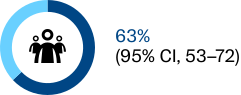
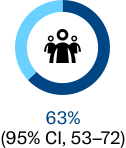
| CBRc |
|
| Investigator-assessed ORR (47%; 95% CI, 37–57) was consistent with the BICR results | |
BICR-assessed best responses by best change from baseline in SoD of target lesions1,d


BICR-assessed change from baseline in SoD of target lesions over time1,e

This was a single-arm trial. Results should be interpreted with caution.
aIncludes non-CR/non-PD in participants with only non-target lesions at
baseline and no evidence of disease in participants with no target or non-target
lesions at baseline.
bRange, 1.1–21.9 months.
cCBR is defined as the percentage of participants achieving a CR or PR,
or durable SD (at the second disease assessment).
dTen participants (NE/UNK: n=6; non-CR/PD: n=1; NED: n=1; PD: n=2)
without
postbaseline tumor assessments are not shown, but all participants, were included
in the ORR analysis.
eExcludes participants without a postbaseline tumor assessment.

This was a single-arm trial. Results should be interpreted with caution.
aSubgroup analyses are not powered to measure statistical
differences.
bNot a prespecified subgroup.
At a median follow-up of 11.8 monthsa, median DoR was NR (95% CI, 6.9–NR) in the 43 responders.1
BICR-assessed DoR and treatment status1

Among responders:
63% of responses are ongoing.1
56% had a response duration ≥6 months.1
This was a single-arm trial. Results should be interpreted with caution.
aRange: 1.1–21.9 months.
At a median follow-up of 11.8 months,a median PFS was 6.8 months,b and median OS was 12.5 months.1
Progression-free survival1,b

Overall survival1

This was a single-arm trial. Results should be interpreted with caution.
aRange for median follow-up is 1.1–21.9 months.
bAssessed by investigator.
| TEAEs (≥15%) by preferred term, n (%) | N=102 | |
|---|---|---|
| All grades | Grade ≥3 | |
| Related to EGFR inhibition6 | ||
| Rash | 38 (37) | 3 (3) |
| Dermatitis acneiform | 35 (34) | 6 (6) |
| Paronychia | 35 (34) | 2 (2) |
| Stomatitis | 29 (28) | 2 (2) |
| Diarrhea | 16 (16) | 0 |
| Pruritus | 15 (15) | 2 (2) |
| Related to MET inhibition6 | ||
| Hypoalbuminemia | 51 (50) | 5 (5) |
| Peripheral edema | 24 (24) | 1 (1) |
| Other1 | ||
| Fatigue | 29 (28) | 4 (4) |
| Hypocalcemia | 25 (25) | 1 (1) |
| Anemia | 22 (22) | 5 (5) |
| Weight decreased | 18 (18) | 1 (1) |
| Hypomagnesemia | 18 (18) | 1 (1) |
| Nausea | 17 (17) | 0 |
| AST increased | 16 (16) | 3 (3) |
| Lymphopenia | 15 (15) | 9 (9) |
| ALT increased | 15 (15) | 4 (4) |
| Decreased appetite | 15 (15) | 0 |
| Hypokalemia | 15 (15) | 3 (3) |
| ARR | 15 (15) | 0 |
This was a single-arm trial. Results should be interpreted with caution.
| Event, n (%) | N=102 |
|---|---|
| Any TEAE | 102 (100) |
| Any grade ≥3 TEAE | 61 (60) |
| Any serious TEAE | 40 (39) |
| Any TEAE leading to: | |
| Dose interruption | 52 (51) |
| Dose reduction | 23 (23) |
| Discontinuation | 17 (17) |
This was a single-arm trial. Results should be interpreted with caution.


This was a single-arm trial. Results should be interpreted with caution.
aEight participants discontinued amivantamab due to treatment-related AEs for the following reasons: rash or pustular rash (n=2), blood alkaline phosphate increased (n=1), folliculitis (n=1), ILD (n=1), paronychia (n=1), pneumonitis (n=1), stomatitis (n=1).


This was a single-arm trial. Results should be interpreted with caution.
Primary publication:
Financial disclosures:
Barbara Burtness: Honoraria: Johnson & Johnson, Merck, Rakuten, GSK, Takeda, MSD, ALX Oncology, Merus, Genmab, Coherus, Astellas; Research Funding: Johnson & Johnson, Merck, IO Biotech, GSK; Consulting or Advisory Role: Johnson & Johnson, Merck, GSK, Genentech, Rakuten, Genmab; Support for Attending Meetings and/or Travel: Merck; Participation on a Data Safety Monitoring Board or Advisory Board: Merus, ALX Oncology; Receipt of Equipment, Materials, Drugs, Medical Writing, Gifts, or Other Services: Zentalis, AstraZeneca, VITRAC. Ari J Rosenberg: Consulting or Advisory Role: Astellas Pharma Inc., Eisai, EMD Serono, Nanobiotix, Novartis, Regeneron; Participation in a Speakers Bureau: Coherus Oncology; Research Funding: AbbVie, BeOne Medicines, Bristol Myers Squibb/Celgene, EMD Serono, Hookipa Pharma, and Purple Biotech. Benoit Calderon: Honoraria: Merck. Sun Min Lim: Honoraria: Amgen, AstraZeneca, Boehringer Ingelheim, Bristol Myers Squibb, J INTS BIO, Eli Lilly, Merck, MSD, Oscotec, Takeda, Therapex, Yuhan, Johnson & Johnson; Research Funding: Johnson & Johnson, MSD, Yuhan; Participation on a Data Safety Monitoring Board or Advisory Board: J INTS BIO, Pierre Fabre, Yuhan. Muh-Hwa Yang: Honoraria: Merck, MSD, Ono Pharmaceutical, Pfizer; Consulting or Advisory Role: MSD, Pfizer. Shau-Hsuan Li: No conflicts of interest to report. Shigenori Kadowaki: Grants or Contracts: Ono Pharmaceutical, MSD, Johnson & Johnson, Eli Lilly, Daiichi Sankyo, AstraZeneca, Taiho Pharmaceutical, Nobel Pharmaceutical, Bayer, Chugai Pharmaceutical, AbbVie; Honoraria: Ono Pharmaceutical, MSD, Merck KGaA, Eli Lilly, Bayer, Novartis, Taiho Pharmaceutical, Daiichi Sankyo, Bristol Myers Squibb, Chugai Pharmaceutical, Eisai. Paul L Swiecicki: Consulting or Advisory Role: Astellas Pharma Inc., CDR Life, Elevar, EMD Serono, GeoVax, Janssen, Prelude, Rapt Therapeutics, Regeneron, Remix, Rgenta; Research Funding: Ascentage Pharma, Summit Therapeutics; Patent, Royalties, Other Intellectual Property: Bio Rad. Jessica L Geiger: Consulting or Advisory Role: Astellas Pharma Inc., Exelixis, Merck, Regeneron; Research Funding: Alkermes, Genentech/Roche, Merck, Merck Serono, Regeneron. William Ince: Honoraria: AstraZeneca, Eisai, Ipsen, Merck Serono, Recordati; Consulting or Advisory Role: Ipsen, Merck, Recordati; Research Funding: Merck; Support for Attending Meeting and/or Travel: Ipsen, Merck. Dennis Hahn: Consulting or Advisory Role: Bristol Myers Squibb, MSD, Merck; Honoraria: Bristol Myers Squibb, MSD, Merck. Ye Guo: Honoraria: Merck Serono, Roche, MSD, BeOne Medicines; Consulting or Advisory Role: AstraZeneca, Bristol Myers Squibb, Johnson & Johnson. Douglas Adkins: Consulting or Advisory Role: Merck, CUE Biopharma, Exelixis, Immunitas, Kura Oncology, TargImmune Therapeutics, Boehringer Ingelheim, Genmab/Seattle Genetics, Seagen, Adlai Nortye, Inhibrx, Merck KGaA, Merus, Purple Biotech, Regeneron, Sanofi, NATCO Pharma; Research Funding: Pfizer (Inst), Eli Lilly (Inst), Merck (Inst), Celgene (Inst), Novartis (Inst), AstraZeneca (Inst), Blueprint Medicines (Inst), Bristol Myers Squibb (Inst), Kura Oncology (Inst), CUE Biopharma (Inst), Cofactor Genomics (Inst), Debiopharm Group (Inst), ISA Pharmaceuticals (Inst), Gilead Sciences (Inst), BeiGene (Inst), Roche (Inst), Vaccinex (Inst), Immutep (Inst), Hookipa Biotech (Inst), Epizyme (Inst), Adlai Nortye (Inst), BioAtla (Inst), Boehringer Ingelheim (Inst), Calliditas Therapeutics (Inst), Genmab (Inst), NATCO Pharma (Inst), Tizona Therapeutics, Inc (Inst), Seagen (Inst), Merus (Inst), Inhibrx (Inst), Erasca, Inc (Inst), Alentis Therapeutics (Inst), Coherus Biosciences (Inst), Takeda (Inst), Xilio Therapeutics (Inst), GSK (Inst), Johnson & Johnson/Janssen (Inst), Rgenta (Inst), AVEO (Inst), Daiichi Sankyo Europe GmbH (Inst), Exelixis (Inst), Tempus (Inst);Travel, Accommodations, Expenses: NATCO Pharma (Inst). Robert Metcalf: Consulting or Advisory Role: Avacta Group. Myung-Ju Ahn: Honoraria: Amgen, AstraZeneca, Daiichi Sankyo, Merck, MSD, Takeda, Yuhan; Consulting or Advisory Role: Amgen, AstraZeneca, BioNTech, Boehringer Ingelheim, Daiichi Sankyo, Johnson & Johnson, Merck, MSD, Takeda, Aimed Bio, Genexine, Dong-A. Ammar Sukari: Honoraria: AstraZeneca, Daiichi Sankyo, Merck, MSD; Consulting or Advisory Role: Eisai, Merck, MSD, Regeneron. Irene Braña: Consulting or Advisory Role: Merck Sharp & Dohme, Cancer Expert Now, Merus, Gilead Sciences, Bicara Therapeutics, AstraZeneca, Boehringer Ingelheim, Pyxis; Research Funding: Janssen Oncology, AstraZeneca, Bristol-Myers Squibb, Celgene, GlaxoSmithKline, Kura, Merck Sharp & Dohme, Novartis, Pfizer, Roche, Shattuck Labs, Nanobiotix, Immutep, Debiopharm Group, Regeneron, Boehringer Ingelheim, ISA Pharmaceuticals, Merck Serono, Seattle Genetics, VCN Biosciences, Tolremo therapeutics, Merus, Biontech, Tango Therapeutics, IDEAYA Biosciences, Gilead Sciences, Bicara Therapeutics, AOP Health, PharmaMar, Hookipa Pharma, Epizyme, Dragonfly Therapeutics, SERVIER, Pyxis. Bhumsuk Keam: Honoraria: MSD; Consulting or Advisory Role: Handok, Trial informatics, TiumBio, Yuhan, Bicara, AVEO; Research Funding: Bayer, AstraZeneca. Hideki Tanaka: Honoraria: MSD KK, Merck & Co, Ono Pharmaceutical, Chugai Pharmaceutical, Janssen Pharmaceutical KK; Patents: National cancer center east fractionated light irradiation in photoimmunotherapy (pending). Siddharth Sheth: Honoraria: Coherus Oncology, Eisai, Inhibrx; Participated in a Speakers Bureau: Exelixis; Research Funding: AstraZeneca, Exelixis, Inovio Pharmaceuticals, Merck, Regeneron; Travel, Accommodations, Expenses: Merus. Marc Oliva: Grants or Contracts: AbbVie, ALX Oncology, Ascendis Pharma, Ayala Pharmaceuticals, Inc., Bayer, BeOne Medicines, Boehringer Ingelheim, Debiopharm, Elixir, Gilead Sciences, GSK, ISA Therapeutics, Merck, MSD, Nykode, Pfizer, Roche, Transgene; Consulting or Advisory Role: BeOne Medicines, Merck Serono, MSD, Transgene; Honoraria: Bristol Myers Squibb, Merck Serono, MSD; Travel, Accommodations, and Expenses: Boehringer Ingelheim, Bristol Myers Squibb, Merck Serono, MSD; Participation on a Data Safety Monitoring Board or Advisory Board: Merck Serono, MSD, Obatica, Transgene. Xuesong Lyu: Employment: Johnson & Johnson; Stock and Other Ownership Interests: Johnson & Johnson. Joshua C Curtin: Employment: Johnson & Johnson; Stock and Other Ownership Interests: Johnson & Johnson. Kiichiro Toyoizumi: Employment: Johnson & Johnson; Stock and Other Ownership Interests: Johnson & Johnson. Mark Wade: Employment: Johnson & Johnson; Stock and Other Ownership Interests: Johnson & Johnson. Brooke Diorio: Employment: Johnson & Johnson; Stock and Other Ownership Interests: Johnson & Johnson. Aastha Kapoor: Employment: Johnson & Johnson; Stock and Other Ownership Interests: Johnson & Johnson. Emrullah Yilmaz: Employment: Johnson & Johnson; Stock and Other Ownership Interests: Johnson & Johnson. Mahadi Baig: Employment: Johnson & Johnson; Stock and Other Ownership Interests: Johnson & Johnson. Priya Kim: Employment: Johnson & Johnson; Stock and Other Ownership Interests: Johnson & Johnson. Remy B Verheijen: Employment: Johnson & Johnson; Stock and Other Ownership Interests: Johnson & Johnson. Sujay Shah: Employment: Johnson & Johnson; Stock and Other Ownership Interests: Johnson & Johnson. Kevin J Harrington: Honoraria: AbbVie, ALX Oncology, AstraZeneca, BeOne Medicines, Bicara Therapeutics, Boehringer Ingelheim, Bristol Myers Squibb, Exelixis, Flamingo Pharma (UK) Ltd, GSK, Johnson & Johnson, Merck Serono, Merus, MSD, Nanobiotix, PDS Biotech, PsiVac Ltd., Replimune, Scenic Biotech; Consulting or Advisory Role: AstraZeneca, Bristol Myers Squibb, Boehringer Ingelheim, Merck Serono, MSD, Nanobiotix, Replimune; Participated in a Speakers Bureau: Bristol Myers Squibb, Merck Serono, MSD; Research Funding: AstraZeneca, Boehringer Ingelheim, Replimune.
- Burtness B, Rosenberg AJ, Calderon B, et al. Amivantamab in recurrent/metastatic HNSCC after checkpoint inhibitor and chemotherapy: pivotal results from the phase 1b/2 OrigAMI-4 study. J Clin Oncol. 2026.
- RYBREVANT FASPRO™ [Prescribing Information]. Horsham, PA: Janssen Biotech, Inc.
- Janssen Research & Development, LLC. A study of amivantamab alone or in addition to other treatment agents in participants with head and neck cancer (OrigAMI-4). In: ClinicalTrials.gov [Internet]. Bethesda (MD): National Library of Medicine (US). 2000- [cited 2026 May 15]. Available from: https://clinicaltrials.gov/study/NCT06385080 NLM Identifier: NCT06385080.
- Harrington KJ, Rosenberg AJ, Yang MH, et al. Subcutaneous amivantamab in recurrent/metastatic head and neck squamous cell cancer after disease progression on checkpoint inhibitor and chemotherapy: preliminary results from the phase 1b/2 OrigAMI-4 study. Oral Oncol. 2026;171:107791.
- Adkins D, Haddad RI, Swiecicki P, et al. Neoadjuvant and adjuvant amivantamab plus pembrolizumab in resectable, locally advanced HPV-unrelated head & neck squamous cell cancer: cohort 6 of the phase 1b/2 OrigAMI-4 study. Abstract presented at: Multidisciplinary Head and Neck Cancers Symposium; February 19-21, 2026; Palm Desert, CA.
- Florez N, LeBoeuf NR, Rotow J, et al. Mitigation and management of adverse events associated with amivantamab therapy. Oncologist. 2025;30(7):oyaf194.
| ALT | alanine aminotransferase | NR | not reached |
|---|---|---|---|
| ARR | administration-related reaction | NSCLC | non-small cell lung cancer |
| AST | aspartate aminotransferase | ORR | objective response rate |
| BICR | blinded independent central review | OS | overall survival |
| CBR | clinical benefit rate | PD | progressive disease |
| CI | confidence interval | PD-(L)1 | programmed death-(ligand)1 |
| COVID-19 | coronavirus disease 2019 | PFS | progression-free survival |
| CR | complete response | PR | partial response |
| DoR | duration of response | Q3W | every 3 weeks |
| ECOG PS | Eastern Cooperative Oncology Group performance status | R/M | recurrent and/or metastatic |
| EGFR | epidermal growth factor receptor | RECIST | Response Evaluation Criteria in Solid Tumors |
| FDA | Food and Drug Administration | SC | subcutaneous |
| GGT | gamma-glutamyl transferase | SD | stable disease |
| HNSCC | head and neck squamous cell carcinoma | SoC | standard of care |
| HPV | human papillomavirus | SoD | sum of diameters |
| ILD | interstitial lung disease | TEAE | treatment-emergent adverse event |
| MET | mesenchymal-epithelial transition | TEN | toxic epidermal necrolysis |
| NE | not estimable | UNK | unknown |
| NED | no evidence of disease | VTE | venous thromboembolic |